If you’ve ever shopped around for vacuum hoses—whether for industrial cleaning, automotive workshops, lab setups, or even hobbyist projects—you’ve probably come across PVC vacuum hoses. And if you’re like most people who need durable, flexible tubing for suction tasks, you’ve also asked the same question I get at my shop all the time: “Are PVC vacuum hoses actually resistant to chemicals?” PVC Vacuum Hose

I’ll be honest. When I first started selling these hoses a decade ago, I didn’t have all the details straight. Back then, I’d just tell customers “they hold up okay” and leave it at that. But over the years, I’ve fielded every type of chemical question—from people pouring mild household cleaners through their hoses to others moving harsh industrial solvents. So let’s break this down like we chat at the trade counter, no stuffy industry jargon required.
First, let’s talk about what makes PVC hoses what they are. PVC (polyvinyl chloride) is a polymer that’s super versatile, which is why it’s used in everything from pipe to shower curtains to, yes, vacuum hoses. But here’s the key point that trips a lot of people up: not all PVC is the same. When we make our vacuum hoses, we use a specific blend of PVC resin, plasticizers, and stabilizers. Plasticizers are what keep the hose flexible (without them, PVC is hard and brittle, like a plastic credit card), and stabilizers prevent it from breaking down in heat or with use. That blend directly impacts how it handles chemicals.
Now, the short answer: PVC vacuum hoses are chemical-resistant, but only to a point. They’re not indestructible, and they definitely aren’t for every chemical out there. Let’s get into which chemicals play nice with PVC, and which ones you’ll want to steer clear of.
First, the good stuff. Most mild, everyday chemicals are totally fine for our PVC vacuum hoses. That includes things like water, diluted household detergents, mild acids (like vinegar or lemon juice), and even oils like mineral oil or light lubricants. If you’re using your vacuum for general cleaning—sucking up spilled soda, dust, or leftover cleaning solution from a workshop floor—this hose will hold up no problem. I’ve had a customer who uses his for auto body cleanup, hosing down dust and wiping it out with a mild soapy solution once a month, and his hose’s still going strong after three years. Another regular is a local dentist’s office that vacuums up dental materials and mild sterilizing solutions—they’ve had zero issues.
What’s more, PVC hoses are resistant to most salts and alkalis. That’s a big one for people in food processing, agriculture, or even pool maintenance. If you’re moving saltwater, dilute lye, or other mild alkaline solutions, our standard PVC blend will stand up to that. It won’t swell, dissolve, or get brittle over time from those chemicals.
Now, here’s where the line gets blurry. The chemicals that don’t mix well with PVC vacuum hoses are the ones you’ll encounter in heavy industrial settings, labs, or things like strong solvents. Let’s name a few: chlorinated solvents (like trichloroethylene or perchloroethylene, common in degreasers), ketones (acetone is a big one—think nail polish remover, which will actually dissolve some PVC), and strong acids (like concentrated sulfuric or nitric acid). If you’re moving these kinds of chemicals through a PVC hose, it’s not just a bad idea—it’ll ruin the hose fast. I’ve seen customers try to use our standard hoses for cleaning metal parts with acetone, and within a week, the hose was soft, cracked, and leaking all over the workshop. That’s the kind of mistake we work hard to help people avoid.
Why is that? PVC’s structure is made of long polymer chains that are held together by weak intermolecular forces. Certain chemicals get between those chains, break them down, or actually dissolve the plasticizer that keeps the hose flexible. When that happens, the hose either swells up (so it won’t fit on your fittings anymore) or gets brittle and cracks when you bend it. It’s not pretty, and it’s definitely a waste of money that could be spent on the right hose for the job.
Now, let’s talk about factors that affect chemical resistance beyond just the type of chemical. First, concentration matters. A 10% solution of hydrochloric acid is way milder than a 90% mix—PVC will handle the diluted stuff, but the concentrated stuff is a no-go. Temperature also plays a role. If you’re moving chemicals at high heat, that speeds up the breakdown process. A chemical that’s fine at room temp might eat through PVC if it’s 140°F, like from a hot cleaning line. That’s why we always ask customers what temperature their chemical is when they reach out to us.
Another big one: how the hose is used. If you’re just pulling a chemical through the hose briefly (like a quick cleanup), that’s different from leaving the hose submerged in the chemical for hours on end. Our hoses are made for suction, so they’re not designed for permanent submersion in harsh chemicals. If you need that, you’ll want a different type of tubing—we sell those too, for exactly that reason.
I get that it’s confusing. There are so many hose types out there: rubber, Teflon, nylon, even hybrid blends. But at the end of the day, most people don’t need a fancy Teflon hose for general vacuum tasks. PVC is perfect for 90% of the everyday and light industrial jobs our customers do, as long as they’re not dealing with those harsh solvents.
Let me give you an example. Last year, a guy from a local printing shop came in panicking. He’d been using a PVC hose to suck up ink residues, and his hose started cracking after two weeks. Turned out, the ink he was using had a small amount of ketone in it—something he didn’t even know about. We swapped him to a reinforced PVC hose that’s made for mild solvents, and it’s been working great for a year now. That’s the kind of conversation we have all the time. It’s not about selling you the most expensive hose—it’s about selling you the right one for your specific chemicals and use case.
Now, a common myth I hear all the time: “PVC hoses can’t handle any chemicals.” That’s just not true. If that were the case, we wouldn’t sell thousands of these hoses every month to auto shops, schools, restaurants, and small manufacturers. They’re cheap, flexible, easy to replace, and they work perfectly for the jobs they’re designed for. The key is knowing what your job is, and what chemicals you’re working with.
So, if you’re wondering whether a PVC vacuum hose is right for your chemical needs, here’s a quick checklist:
- Are your chemicals water-based, mild acids, alkalis, or light oils? If yes, our standard PVC hoses will work.
- Are your chemicals harsh solvents (acetone, chlorinated degreasers), strong concentrated acids, or ketones? Then you’ll want to look at our reinforced PVC or other specialty hoses, or chat with me about what’s best.
- Will you be using the hose at high temperatures (over 120°F)? Let’s talk before you buy, because that can affect performance.
At the end of the day, I’d rather you get a hose that works for you than waste money on something that doesn’t. That’s why I’m always happy to answer questions—no pressure, no sales pitch, just straight talk about what’ll hold up. If you’re not sure what you need, just reach out and tell me what chemicals you’re moving, what temperature, and how you’ll use the hose. We can even send you a sample to test, so you can see for yourself how it handles.
I’ve been in this business long enough to know that the worst thing I can do is sell someone a hose that’s wrong for their job. It saves them money, and it saves me the hassle of having to take back a hose that got ruined because of a misinformation. So when you’re shopping around, don’t just look at the price tag. Ask about the chemical resistance, and make sure the supplier knows their stuff.
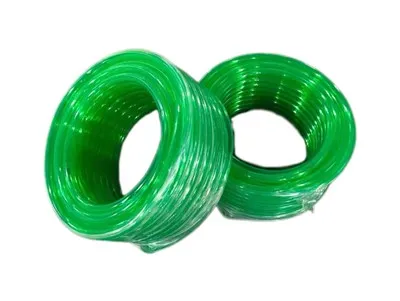
If you’re ready to pick up a hose, or just want to double-check if PVC is right for your needs, hit me up. We can talk through your exact setup, send over details on our chemical-resistant blends, and get you what you need to get your job done right. No hoops, no fancy forms—just real advice from someone who’s spent years learning the ins and outs of vacuum hoses.
Water Hose References:
- Modern Plastics Encyclopedia, Society of Plastics Engineers, 2021.
- Chemical Resistance Guide for Thermoplastics, Plastics Industry Association, 2022.
- PVC Hose Material Properties and Applications, Industrial Hose and Fittings Association, 2020.
Weifang Xinzhiyuan Plastic Co., Ltd.
As one of the most experienced pvc vacuum hose manufacturers and suppliers in China, we offer a wide range of products with superior quality. Please feel free to wholesale premium pvc vacuum hose made in China here from our factory. We also accept customized orders.
Address: No. 700, Tongle Street, Economic Development Zone, Changle County, Weifang City, Shandong Province
E-mail: hua@xzypvchose.com
WebSite: https://www.pvchose-xzy.com/
