If you’ve ever looked into ditching plastic food containers for something more sustainable, chances are you’ve come across bagasse boxes. As a bagasse box supplier who’s been in this space for seven years, I get asked this question at least a dozen times a day: “How much does it cost to customize bagasse boxes?” The short answer is, it’s not a one-size-fits-all number—but that’s what makes the conversation worth having. Too many suppliers will slap a generic price on a quote without digging into the details that actually matter, and that’s not how I do business. Let’s break down the real costs, the variables that shift the price, and what you can expect when you’re ready to order custom bagasse boxes for your brand. Bagasse Box
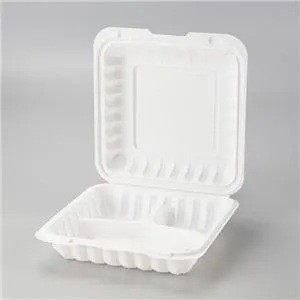
First, let’s start with the basics: what is a bagasse box, anyway? For anyone new to the term, bagasse is the fibrous byproduct left after sugarcane is crushed to make sugar. It’s 100% compostable, microwave-safe, and sturdy enough to hold hot or greasy food—perfect for takeout, meal prep, or catering. Unlike plastic or even paper, it breaks down in 90 days in a commercial compost facility, no weird additives required. That sustainability is why so many cafes, food trucks, and grocery stores are switching, and why customizing them with your logo, brand colors, or even custom shapes is such a big ask.
Now, to the cost. When a client first reaches out, I don’t jump to a price per unit right away. Instead, I walk through the four main factors that shape the final cost: order quantity, box size and thickness, custom design and printing, and additional add-ons. Let’s go through each one because skipping any of these leads to miscommunication—and nobody wants to overpay or get a box that doesn’t work for their needs.
Order quantity is the single biggest driver of cost, plain and simple. Bagasse boxes are made with large industrial molds, so the more units you order, the lower the per-unit cost. I’ve had small coffee shops come to me needing 500 boxes for a one-time lunch pop-up, and their per-unit cost is way higher than a national fast-casual chain that orders 500,000 boxes a year. Here’s a rough breakdown to give you an idea: for quantities under 1,000 units, per-unit costs usually start around $0.75 to $1.10. For 10,000 units, that drops to $0.40 to $0.65, and for 50,000 units or more, it’s between $0.22 and $0.40 per unit. Why the gap? The setup cost for each mold and print plate is spread out over more units when you order in bulk. That’s not just a supplier trick—manufacturers have minimum runs for custom tooling, and smaller orders mean the fixed costs (like creating the mold for your box size) add more to each individual unit. I always tell new clients that if you’re not sure what quantity you’ll need, it’s better to lean into a slightly larger order if you can afford it—even holding extra boxes in a backstock usually saves you money long-term than reordering smaller quantities later.
Next, box size and thickness. Bagasse isn’t a one-size material; it’s pressed from sugarcane fiber, so the thickness of the box depends on what it’s going to hold. A 12oz clamshell for salads is thinner than a 32oz takeout box for a large pasta entree, which in turn is thinner than a heavy-duty box for fried chicken or hot, saucy ribs. Thicker material costs more because it uses more fiber, and larger boxes require bigger molds, which also adds to production costs. Let’s add numbers here: a small 8oz bagasse side dish box, made with standard 3mm thickness, runs around $0.25 to $0.40 per unit in bulk. A medium 16oz clamshell, 4mm thickness, is $0.35 to $0.55 per unit. A large 32oz takeout box, 5mm thickness, is $0.45 to $0.70 per unit. If you need a custom shape—like a box with a partition for separating rice and veggies, or a compartment for sauces—that adds a little extra because the mold has to be adjusted to fit those features. I recently worked with a vegan meal prep brand that needed boxes with three separate compartments; their per-unit cost was 10 cents higher than a standard single-compartment box, all because the mold had to be modified to create those dividers. That’s a small adjustment, but it’s important to mention upfront so you don’t get sticker shock later.
Third, custom design and printing. This is where your brand comes to life, and it’s the second biggest cost factor after order quantity. Bagasse boxes can be printed with your logo, brand colors, or even custom artwork—there are two main printing methods, and each has its own cost. The first is flexographic printing, which is great for simple designs: a single color logo, black text, or a small pattern on the lid. Flexo is cost-effective because the plates are easy to make, and it works well for most custom bagasse orders. For flexo printing, the setup cost (for the print plate) is usually $150 to $300, and that’s a one-time fee you only pay once, even if you reorder. The more colors you use, the higher the setup cost: single color is on the lower end, two colors are $200 to $300, three or more colors can jump to $300 to $500. Then there’s digital printing, which is perfect for small orders or very detailed designs—like full-color photos, gradients, or custom artwork that can’t be done with flexo. Digital printing has no setup fee, but the per-unit cost for printing is higher. For example, a digital printed bagasse box might add $0.10 to $0.20 per unit, compared to $0.02 to $0.08 per unit for flexo. That’s why I always tell clients: if you’re ordering more than 5,000 boxes and your design is two colors or less, flexo is the way to go. If you need full-color images for a limited-time campaign, digital might be worth the extra cost. I had a client last year who ran a summer pop-up for their ice cream shop; they ordered 1,000 digital printed boxes with custom summer designs, and even though the per-unit print cost was higher, the setup fee saved them hundreds of dollars compared to flexo. It’s all about matching the printing method to your order size and design needs.
One thing I get asked a lot: can you print on the inside of the box? The answer is yes, but that’s an extra cost because it requires a second pass through the printing machine, and sometimes the inside needs a special coating to make the ink stick (especially if the box is going to hold greasy food). That usually adds $0.05 to $0.10 per unit, so it’s only worth it if you have a very specific reason—like printing allergy information or a fun recipe on the inside lid.
Now, add-ons. These are the little extras that can make your bagasse boxes work harder for your business, but they also add to the cost. The most common add-on is a coated or lined interior. If you’re serving hot, greasy, or acidic food (like tacos, fried chicken, or citrus-based salads), a standard bagasse box won’t hold up as long—it can leak or get soggy. That’s where a bio-based lining comes in: it’s made from plant-derived materials, so it’s still compostable, but it creates a barrier to prevent leakage and sogginess. A lined box adds $0.08 to $0.15 per unit, which I always tell clients is a worthy investment because it means less food waste from leaking containers, and more satisfied customers. Another add-on is a custom lid seal—some brands want lids that snap tight to prevent spills during delivery, and that requires a modified mold, which adds $0.05 to $0.10 per unit. I also offer custom labeling, but most clients prefer printing their designs directly on the box to cut costs, so that’s usually for smaller orders or special promotions.
Wait, let’s talk about hidden costs too, because no one likes surprises. When you’re customizing bagasse boxes, there are two common hidden costs people don’t plan for. The first is mold creation. If you’re ordering a custom size or shape that’s not a standard bagasse box, you’ll need a new mold. Mold costs vary a lot, depending on the complexity: a standard round mold for a salad bowl is $200 to $500, while a custom rectangular mold with compartments can be $500 to $1,200. The good news is, that’s a one-time fee—once you have the mold, you can reuse it for future orders. The second hidden cost is shipping. Bagasse boxes are lightweight, but bulk orders can be large, so shipping costs depend on your location in the world and the order size. I work with freight partners that specialize in sustainable packaging, so I can usually give you a free shipping quote upfront, but it’s always good to ask about that when you’re getting a total cost.
Now, let’s put this all together with real examples to make it concrete. Let’s say you’re a new salad shop in Chicago, and you want to customize 10,000 medium 16oz clamshell boxes, two-color logo print on the lid, and a lined interior to prevent sogginess. Let’s calculate the total cost: order quantity is 10,000, so base per-unit cost for a 16oz box is $0.45. Lined interior adds $0.12 per unit, so that’s $0.57 per unit. Two-color flexo printing has a $250 setup fee, and per-unit print cost is $0.05, so print cost for 10,000 units is $500. Total cost would be (10,000 * $0.57) + $250 + $500 = $5,700 + $750 = $6,450. That works out to $0.645 per unit, which is a fair price for custom, lined bagasse boxes. Another example: a large catering company in Los Angeles that needs 50,000 heavy-duty 32oz takeout boxes for a corporate lunch, custom three-color logo print, no lining. Base per-unit cost for a 32oz heavy-duty box is $0.55. Three-color flexo setup fee is $400, per-unit print cost is $0.07, so print cost for 50,000 units is $3,500. Total cost: (50,000 * $0.55) + $400 + $3,500 = $27,500 + $3,900 = $31,400. That’s $0.628 per unit, and because the order is bigger, it’s a slightly lower per-unit cost than the smaller order.
I should also mention that there are ways to save money on custom bagasse boxes without sacrificing quality. First, go for standard sizes if you can. Custom shapes mean custom molds, which add cost, so if a standard 16oz clamshell works for your needs, stick with that. Second, limit the number of colors in your print. More colors mean higher setup fees, so a two-color logo is cheaper than a full-color design. Third, order in bulk if you have the storage space. Even if you only need 10,000 boxes for now, ordering 20,000 can cut your per-unit cost by 15% to 20%, and you won’t have to pay for setup fees again when you reorder. Finally, ask about eco-friendly certifications. All the bagasse boxes I supply are BPA-free, compostable, and meet FDA food safety standards, but some suppliers charge extra for certifications, so make sure that’s included in your quote.
A common myth I hear is that custom bagasse boxes are way more expensive than traditional plastic or styrofoam boxes. Let’s bust that myth: a standard styrofoam takeout box costs around $0.20 to $0.30 per unit, but that’s a single-use, non-compostable product. Custom bagasse boxes, when you account for their sustainability benefits and durability, are often only 10% to 20% more expensive than styrofoam, and that difference is shrinking as bagasse production becomes more efficient. For brands that care about their environmental footprint, that extra cost is worth it—but I also make sure to work with clients to find a custom box that fits their budget, not just the latest trend.

Now, if you’re at the point where you’re ready to get a custom bagasse box quote, here’s what you need to have ready to make the process smooth: your estimated order quantity, the size and thickness of the box, any design details (colors, logo, artwork), and if you need any add-ons like lining or compartments. The more info you can give upfront, the more accurate and transparent my quote will be. I never hide fees or add unexpected costs to a quote, because I’ve been in this long enough to know that trust is everything when it comes to sustainable packaging.
Plastic Round Plate If you’re tired of generic, one-size-fits-all packaging that doesn’t match your brand, and you want to make the switch to compostable custom bagasse boxes, I’m here to help. Whether you’re a small food truck needing a few hundred boxes or a large restaurant chain needing hundreds of thousands, I can work with you to create a custom box that fits your budget and your needs. Reach out to discuss your project, ask any questions you have, and we’ll walk through every step of the process to make sure you get a product you’re proud to put your brand on.
References
- American Forest & Paper Association. (2022). Compostable Packaging: Market Trends and Cost Analysis.
- Sustainable Packaging Coalition. (2021). Bagasse Fiber: Production Methods and Application Costs.
- Food and Agriculture Organization of the United Nations. (2020). Sugarcane Byproducts for Sustainable Packaging: Economic and Environmental Benefits.
- Packaging Digest. (2023). Custom Printed Compostable Containers: Cost Drivers and Pricing Models for Small to Medium Businesses.
Huizhou Yangrui Printing & Packaging Co., Ltd.
Huizhou Yangrui Printing & Packaging Co., Ltd. is one of the top level bagasse box manufacturers and suppliers in China, welcome to wholesale products from our professional factory. And if you are seeking for manufacturer printed bagasse box wholesale business opportunities, please also feel free to contact us.
Address: 1-3F, Bldg.1, Fushun Technology Park, East Industrial Park, Huatang Village, Shatian, Huiyang, HZ, GD,CN
E-mail: sales@packagingbag5.com
WebSite: https://www.packagingbag5.com/
