If you’ve ever stopped to admire a well-crafted outdoor pergola—whether over a backyard dining nook, a rooftop patio, or a commercial outdoor lounge—you’ve probably noticed two key things: how sturdy it looks, and how easy it is to operate, especially if it’s a hand-crank model. As a supplier of hand-crank aluminum pergolas, one question I get asked more than any other is: “What does that thing actually weigh?” It’s a fair question, and it’s not one with a one-size-fits-all answer. The weight of a hand-crank aluminum pergola depends on way more than just the material it’s made of, and understanding that weight matters for everything from installation logistics to long-term durability. Today, I’m breaking down exactly how we calculate our pergola weights, why weight isn’t just a number, and what that number means for you. Hand-Crank Aluminum Pergola
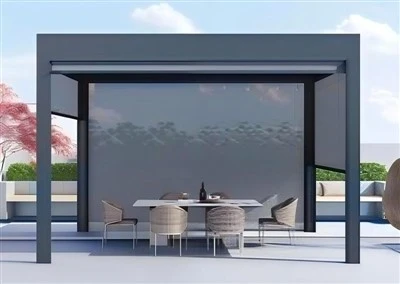
First, let’s set the baseline: not all aluminum is the same, and not all hand-crank mechanisms are built alike. When people hear “aluminum,” they often think of flimsy, thin-shed window frames or disposable patio furniture. But the aluminum we use for our pergolas is commercial-grade, structural aluminum—usually 6063-T5 alloy, which is the standard for outdoor architectural applications. This alloy is chosen for a reason: it’s lightweight relative to steel, it resists rust and corrosion (critical for outdoor use), and it has enough tensile strength to hold up to wind, rain, and even occasional snow loads without bending or warping. That said, 6063-T5 aluminum comes in different gauges, and the thicker the aluminum, the more it weighs. A pergola made with 0.063-inch (1.6mm) aluminum tubing will be lighter than one built with 0.080-inch (2mm) tubing, but the thicker version will also be sturdier. For reference, structural aluminum weighs roughly 2.7 grams per cubic centimeter, which is about a third the weight of steel. That’s why even a large pergola made of aluminum is lighter than a similar-sized steel model, though not as light as a vinyl or wood model of the same size.
Next, the biggest factors that determine a hand-crank aluminum pergola’s weight are size and design. Let’s start with the basic, most popular size for residential use: a 10×10 foot pergola. Our standard 10×10 hand-crank aluminum pergola weighs approximately 185 to 210 pounds. That range accounts for different add-ons that most customers choose, like adjustable louvers, which are the slatted panels that open and close to control sunlight and rain. The louvers themselves add about 35 to 40 pounds to the total weight, since they’re not just thin sheets of aluminum—they’re reinforced along the edges to handle the torque of the hand-crank mechanism and to support wind loads up to 50 miles per hour, which is a common requirement for most U.S. regions. If you skip the louvers and go with a solid fixed aluminum roof (which is less common, since the whole point of a hand-crank pergola is adjustability), that same 10×10 model drops to around 140 to 160 pounds.
Size is an obvious variable, but what surprises most customers is how design choices add or subtract weight. For example, a 12×16 foot residential pergola, a popular size for outdoor kitchens or poolside seating, weighs between 380 and 420 pounds. That’s double the weight of a 10×10, but not exactly double—and here’s why: we use standard extrusion profiles for all our components, so scaling up a pergola doesn’t just add proportional amounts of tubing; we often use slightly thicker supports for larger spans to prevent sagging. A 10×10 pergola has 4×4 inch vertical posts, while a 12×16 has 6×6 inch posts, and those thicker posts add more weight than just the increase in size. For commercial pergolas, which are often 16×20 feet or larger, the weight jumps to 650 to 750 pounds, depending on features like integrated LED lighting or wind sensors that sync with the hand crank.
Now, let’s talk about the hand-crank mechanism itself, because that’s the whole reason these pergolas operate. The crank is not just a little handle you turn on the side—our crank systems are enclosed in a weather-resistant, cast aluminum housing, and they’re connected to a series of stainless steel gears and cables that move the louvers. Stainless steel is another material that adds weight, but it’s non-negotiable for outdoor use; plastic gears would wear out in a couple of years, and galvanized steel gears would rust. The crank assembly alone adds about 25 to 30 pounds to a pergola’s total weight, compared to a non-operational fixed-roof aluminum pergola. That’s a small fraction of the total weight, but it’s an important part of the equation because the crank has to support the full weight of the louvers when they’re tilted. You wouldn’t want a hand crank that moves a 40-pound louver to be flimsy, so we build those components to last, which adds a bit of extra heft.
You might be wondering: does this weight actually matter? Short answer: yes, more than you think. First, installation. A 10×10 pergola at 200 pounds is manageable for two people, but a 12×16 at 400 pounds? That’s going to require three or four people, and it’s not something you want to hoist up a patio wall or onto a second-floor deck. Most of our customers don’t realize that they need to plan for enough manpower (or equipment, if they’re installing it on a rooftop) when their pergola weighs over 300 pounds. That’s why we always send installation guidelines that note the required number of installers for each model, based on its weight. Second, structural support for your deck or patio. Even a light aluminum pergola isn’t meant to be installed on a flimsy surface. Building codes require that any permanent outdoor structure over a certain weight has a secure foundation. A 200-pound pergola can be mounted to concrete footings, while a 500-pound commercial model will need steel rebar and thicker footings to support the load. Undersized footings are a top cause of pergola damage in wind or snow, so knowing your pergola’s weight is step one to avoiding that.
Another common question: why does my neighbor’s aluminum pergola weigh half as much as mine? Maybe they bought a cheaper model from a big-box store, not a specialty supplier like us. That difference almost always comes down to material quality and thickness. Many budget pergola manufacturers use thinner aluminum tubing—sometimes as thin as 0.040 inches, which is less than half the thickness of a soda can. That’s lightweight, but it’s also flimsy; those pergolas often bend after a year or two, or the louvers won’t close properly because the crank mechanism pulls on thin, warped slats. At our company, we test every component to make sure it can handle extreme conditions—we’ve subjected our louvers to wind speeds of 80 mph and temperature swings from -20 to 120 degrees Fahrenheit, and that testing means our pergolas are heavier than the cheapest options on the market. But that extra weight is part of what makes them last 20 years or more, compared to 5 to 10 years for a budget model.
I also get asked a lot about weight vs. other materials, just for comparison. Let’s say you’re choosing between a hand-crank aluminum pergola, a wood pergola, and a vinyl pergola. A similar-sized cedar wood pergola weighs about 30 to 50 pounds for a 10×10 model, but that’s before you apply stain, sealant, and hardware—add another 20 to 30 pounds, and it’s still lighter than aluminum. But wood requires annual maintenance, and it’s prone to rot, termites, and warping. Vinyl pergolas are even lighter, at 20 to 40 pounds for a 10×10, but they can crack in extreme cold and don’t have the same structural rigidity as aluminum. So while aluminum is heavier, it’s also the most durable option for outdoor use, especially in areas with harsh weather. That trade-off is why our customers choose us over other materials: they’re willing to carry a little extra weight for a pergola that doesn’t need yearly staining, doesn’t rust, and lasts decades.
Now, I should note that all the weights I’ve mentioned are for fully assembled pergolas. If you’re ordering a kit to assemble yourself, the weight will be the same, but it will be broken down into individual boxes, so you don’t have to move the whole thing at once. For example, our 10×10 kit comes in three boxes: one for the posts (about 70 pounds), one for the frame and louvers (about 90 pounds), and one for the hand crank and hardware (about 40 pounds). That makes it much easier to transport, even if you don’t have a large truck. We always label each box with its individual weight, so you can plan for moving it around your property without straining yourself.
One last thing that many people don’t consider: the weight of a pergola when it’s covered in snow or rain. A square foot of snow can weigh 5 to 20 pounds, depending on how wet it is, and a square foot of rain can add another pound or two. That means a 10×10 pergola with 2 inches of wet snow on its louvers could have an extra 200 to 800 pounds of weight on it—way more than the pergola itself. That’s why all our hand-crank pergolas are engineered to handle live loads (that’s the term for additional weight from snow, people, etc.) of at least 30 pounds per square foot, which is the standard for most residential areas. The extra structural strength that lets it handle that load is another reason our pergolas weigh what they do.
At the end of the day, when you’re choosing a hand-crank aluminum pergola, weight is just one piece of the puzzle. It’s not the only thing that matters, but it’s tied to durability, ease of installation, and how well your pergola will hold up over time. We don’t cut corners on material thickness or component quality to make our pergolas lighter, because we know our customers want a structure they can count on for years of backyard barbecues, sunset drinks, and lazy afternoons.
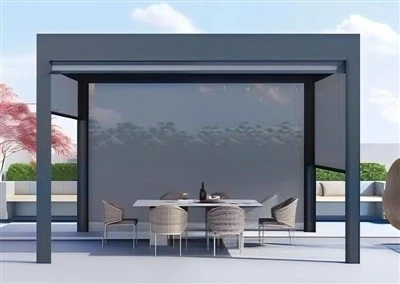
If you’re ready to learn more about our hand-crank aluminum pergolas, including exact weights for custom sizes or commercial models, feel free to reach out for a consultation. We can walk you through all the factors that matter for your specific space, from installation requirements to weather resistance, and help you find the perfect pergola for your needs.
Aluminum Windows References
- Aluminum Association. (2022). Structural Aluminum Alloys for Outdoor Architectural Applications.
- International Residential Code (IRC). (2021). Chapter 5: Footing and Foundation Requirements for Decks and Pergolas.
- American Society of Civil Engineers (ASCE). (2020). Minimum Design Loads and Associated Criteria for Buildings and Other Structures (ASCE 7-20).
- Outdoor Industry Association. (2023). Pergola Material Comparison Report: Durability, Maintenance, and Lifespan.
- National Wood Flooring Association. (2022). Wood vs. Alternative Decking and Pergola Materials Guide.
Shandong RobynGoods Imp&Exp Co., Ltd.
As one of the most professional hand-crank aluminum pergola manufacturers and suppliers in China, we also support customized service. Please rest assured to wholesale discount hand-crank aluminum pergola in stock here from our factory. Quality products and reasonable price are available.
Address: Room 414, Shengdiguangyao Mansion, Shencheng Subdistrict, Shouguang, Weifang, Shandong Province, China
E-mail: info@robynoutdoor.com
WebSite: https://www.robynoutdoor.com/
