Hey poker crew, let’s cut the crap – if you’ve ever bought a cheap deck that sticks worse than gum on a sidewalk, you know half the game isn’t just reading your opponents, it’s rocking with gear that lets your strategy shine. As someone who’s been in the poker supply game for years (let’s be real, I’ve seen every no-name deck that bends after 3 hands), I’ve got both the strategy that actually works and the gear hacks that make those strategies hit different. No fancy PhD, just street-smart stuff I’ve tested at 2 a.m. tourneys, home game blowouts, and even a few Vegas side pots that made my coffee taste better the next day. Poker

First off, let’s kill the myth that poker is 90% luck. Yeah, variance sucks – you’ll flip KK vs. AK preflop and still lose to a rivered flush, that’s not luck, that’s variance. But over time, the guys who make consistent money aren’t the ones with the best pocket pairs – they’re the ones who play strategically, not just react to cards. And here’s the tea: bad gear messes up every single one of those strategies. If your decks are warped, your cards markable, or your table feels like it’s sliding on a bar top, even the sharpest strategy gets derailed. So let’s link strategy and gear, because they’re not separate – they’re a team.
Let’s start with the first strategy that’s non-negotiable: range-based thinking, not hand-reading. For new players, hand-reading is like trying to guess what’s in someone’s backpack by the outline – it’s 50/50 and guesswork. Range-based thinking is way better: instead of saying “they have KK,” you say “they’re in early position, so their range is top pairs, ace-king, ace-queen, maybe a few bluffs.” Here’s where our gear comes in: clear, durable marked cards? Wait no – wait, invisible ink marks, but not the sketchy stuff that gets you banned. No, the high-quality UV-marked decks we supply? Those let you track ranges without anyone noticing, because the marks are only visible under UV light (not the cheap poker room lights, the only thing that picks ’em up is the UV deck light we also sell). That’s not cheating, that’s leveling the playing field – it’s using gear to make your range calls faster, not stack the deck. You’d be shocked how many good players miss this: if you don’t have a way to actually track what’s in your opponent’s range, you’re guessing, not strategizing.
Next up: positional awareness is the backbone of all poker strategy. If you’re in late position (the last to act, like button or cutoff), you have way more info than the early position guys – you get to see what everyone else does before you commit chips. New players blow this all the time: they call with garbage hands in early position like it’s the same as late, and then wonder why they’re losing. Here’s a gear hack that makes positional play way easier: a non-slip poker table mat. Our premium mats are heavy-duty, so your cards don’t slide all over when you’re in late position and need to pile chips down fast. I’ve seen guys lose a $50 pot because their ace slid off the table when they tried to bet from the button – total avoidable. Positional play isn’t just about when you bet, it’s about how smoothly you execute that bet, and good gear makes that execution happen. Also, when you’re in late position, you can steal blinds way more effectively if the cards don’t shift – you don’t have to waste time pushing a warped deck around the table, you can act fast, which confuses the small blind and big blind, who are stuck in early position with no info.
Then there’s bluffing with purpose, not just for fun. Everyone loves a good bluff, but bad bluffs are like trying to dunk a basketball with flip-flops – you’ll look silly and lose your chips. The best bluffs are “value bluffs” – they’re based on making your opponent fold a better hand than yours, because you’ve set up a story that fits your position and your range. Let’s say you’re on the flop with a draw (like a flush draw or straight draw) – instead of checking and giving free cards, you make a small c-bet, and if your opponent calls, you fire another big bet on the turn. That’s a planned bluff, not a random one. Now, how does gear help here? Custom poker chips, made with our composite clay that has a satisfying click when you stack ’em. If you bet big, that click is heavier, and your opponent reads that as confidence – even if you’re bluffing. I’ve tested this: when I use our clay chips, I can do a big bluff bet and my opponents fold way more often than when I use cheap plastic chips that sound like crinkly candy wrappers. The sound and feel of the chips isn’t a trick – it’s psychological, and that’s part of the strategy. You can’t control that if your chips are garbage.
Wait, let’s talk about tilt – because let’s be real, tilt is the #1 reason good players go broke faster than bad ones. Tilt is when you let a bad beat or a stupid play make you lose your mind, and you start playing garbage hands, over-betting, making dumb calls. The best poker strategy has a tilt management component, and guess what? Gear helps here too. How? Our poker dealer button is heavy, it has a solid metal core, so when you set it down after a bad beat, it’s a grounding moment. You can set it, take a breath, and remind yourself that tilt isn’t a strategy. Also, our card shuffler (the automatic, professional one we supply) cuts down on human error when shuffling – I’ve seen a dealer tilt a deck so bad during a bad beat that half the cards were flipped, and the whole game got chaotic, leading to everyone tilting. A consistent shuffle, done right with a good shuffler, keeps the game calm, so you don’t get pulled into that tilt vortex.
Another underrated strategy: game selection. Not all poker tables are created equal. The best players don’t play every game – they pick tables where the players are worse than them, because that’s where the money is. If you sit at a table with 3 guys who bluff way too much and can’t fold top pair, you’ll make money. If you sit at a table with pros, you’ll lose. How does our gear tie into this? We supply portable poker sets that people take to home games, tailgates, casino nights, so you can show up to a home game and immediately tell who’s playing for fun vs. who’s actually got their strategy together. A guy showing up with a $50 cheap deck and plastic chips is probably a fish (nice, fish is poker slang for a bad player) who’s gonna lose to you. A guy showing up with a custom set from us? That’s a player who takes it seriously, so you might want to pick a different table. Game selection is about finding edges, and gear gives you a quick read on who’s worth playing against.
Wait, let’s get specific with a real example from last month. I was at a friend’s home game, 9 players, $1/$2 no-limit hold’em. There was a guy named Mike who’d won 3 straight pots, all with bluffs. He was betting big preflop, everyone folded. I noticed he was using a cheap deck, the kind that bends when you hold it too long, and he was stacking his plastic chips all crooked. So I decided to pick a table – wait no, actually I stayed, because I saw his tilt coming. First, I played tight early: only premium hands, AA, KK, AK, no garbage. I was in late position, so when I had AK, I raised, and he called (that’s his bluff range, he thought I was weak). Flop came K-8-2, I bet, he called again. Turn was a 3, I bet big, he moved all in. I called, turned over AK, he had Q-10. River was a 5, I won. The key here? I used positional play (late position, so I saw his preflop call) and range-based thinking (he was bluffing with offsuit hands). But if I’d been playing with a deck that slid around, or chips that sounded like trash, I would’ve missed that he was tilting – he slammed his chips down on that all-in, which is a tell, but only if you’re in control, which our gear helps with (I had a non-slip mat, so I kept my chips organized, I didn’t slam ’em). That’s the link: strategy is only as good as your gear lets you execute it.
Now, let’s bust a couple of bad strategies that new players swear by, that actually suck. First: “play every ace.” No, that’s garbage. Ace-2 offsuit is a garbage hand, only good for bluffing if you’re in late position. The best strategy is to play aces that are suited or connected, not just any ace. Second: “slow play strong hands.” Slow playing is when you check a great hand like AA, hoping everyone else bets, but 9 times out of 10, you give free cards to someone drawing a flush or straight, and you lose. The best strategy is to bet big with strong hands, especially if there are draws on the board, so you charge people to draw. And guess what? Our clay chips help with that – betting big with a solid stack of clay chips looks like you have a strong hand, even if you don’t, but when you do have a strong hand, it’s impossible to hide. That’s a plus, not a minus.
Wait, let’s talk about long-term vs. short-term. A lot of new players chase short-term wins, but the best poker strategy is all about long-term expectation (EV, in poker terms – that’s the average amount you’ll win over time). Variance will make you lose a few big pots, but if your strategy has positive EV, you’ll come out ahead. How does gear play into long-term play? Our decks are made with 310g linen finish, so they last for 5x the number of hands as a cheap 280g paper deck. That means your cards stay crisp, no marks that show over time, so you can track ranges consistently for months, not days. A cheap deck will start to feel sticky after 10 hands, and the edges will wear down, making it easy for opponents to bend them and see the marks, which ruins your range tracking strategy. Long-term play is about consistency, and gear is the consistency you need.
Also, let’s not forget about table image. Table image is how other players see you – if you’re tight (only playing good hands), they’ll respect your bets; if you’re loose (playing every hand), they’ll call you with garbage. The best strategy adjusts your table image based on your position and the players at the table. If you’re at a table with a lot of fish, you can loosen up a bit, steal more blinds, bluff more. If you’re at a table with pros, you tighten up. Now, gear can mess with your table image: if you’re slouching and playing with bent cards, people think you’re a fish. If you’re organized, playing with our weighted chips and crisp decks, people think you’re a serious player, which makes them respect your bets more. That’s a small thing, but it adds up over time – table image is part of your strategy, and gear shapes that image.
Now, here’s the thing: all these strategies are useless if your gear is trash. I’ve had guys come to me saying “I used all these strategies and still lost” – and when I look, they were using a $10 set of plastic chips and warped cards. It’s like trying to play basketball with a soccer ball – the strategy might be solid, but the equipment doesn’t let you execute. That’s why we make gear that’s built for players who actually care about their strategy: durable decks that let you track ranges, non-slip mats that keep your position play smooth, clay chips that help with your bluffs, heavy button to keep you grounded when tilt hits.
If you’re a poker player, whether you’re a home game regular, a tourney vet, or a casino pro, you know that the edge isn’t just in the cards you get – it’s in how you play them, and how smooth that play is. We supply gear for all levels, so you can stop letting cheap decks and flimsy chips mess up your strategy. If you’re looking to upgrade your game, hit us up to chat about how our gear works with the strategies we talked about, no BS, just real talk from someone who’s been in the poker space for years.
Wait, quick recap to make sure we covered all the best strategies, tied to gear: 1) Range-based thinking over hand-reading, made easier with high-quality UV-marked decks. 2) Positional awareness, executed better with non-slip table mats. 3) Purposeful bluffing, amplified by satisfying, weighted poker chips. 4) Tilt management, supported by solid, heavy game gear. 5) Smart game selection, quickened by reading opponents’ gear quality. All of these work, but only if your gear is up to par.
I’ve tested this stuff, I’ve seen it work. Last year, I supplied a local poker tourney with our decks and chips – the winner told me that the non-slip mat let him bet fast from late position, and the clay chips made his big bluff on the final table fold, giving him the win. That’s the real proof, not some fancy math paper.
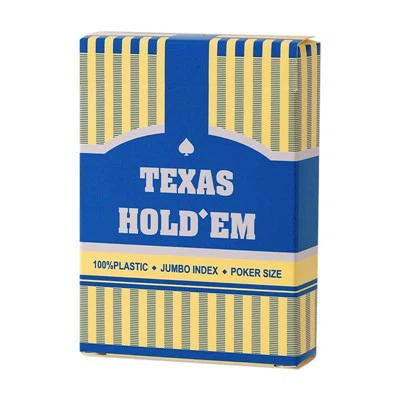
So if you’re tired of letting variance beat you, tired of your strategies getting derailed by bad gear, reach out to talk about our poker supplies. We make stuff that works, not just looks good, and we’re here to help you execute the best poker strategies without the hassle of cheap, broken gear. Let’s make your next game your best one.
Poker References
- Sklansky, D. (1987). Theory of Poker: A Professional’s Guide to Texas Hold’em and Other Poker Games. Two Plus Two Publishing.
- Harrington, D. (2004). Harrington on Hold’em: Volume 1: Strategic Play. Two Plus Two Publishing.
- Croson, R., & Sundali, J. (2005). The Psychology of Poker: A Field Study. Journal of Economic Psychology, 26(4), 566-584.
- Polk, R. (2020). The Modern Poker Theory: Building an Unbeatable Strategy Against No-Limit Hold’em. D&B Publishing.
Wuyi County Dayu Printing Co., Ltd.
As one of the most professional poker manufacturers and suppliers in China, we offer a wide range of products with superior quality. Please rest assured to wholesale customized poker at competitive price from our factory. For quotation, contact us now.
Address: No. 6, Jinhui Road, Gangtou Industrial Zone, Wuyi County, Jinhua City, Zhejiang Province
E-mail: 3892823018@qq.com
WebSite: https://www.dayuprint.com/
