The particle size of raw materials plays a pivotal role in the efficiency and quality of a feed pellet line. As a seasoned supplier of Feed Pellet Lines, I’ve witnessed firsthand how this seemingly minor factor can have far – reaching implications for the entire production process. In this blog, I’ll delve into the effects of raw material particle size on a feed pellet line, exploring both the positive and negative impacts it can have. Feed Pellet Lines

Impact on Pellet Quality
One of the most significant effects of raw material particle size is on the quality of the final feed pellets. The ideal particle size distribution ensures that the pellets are uniform in shape, density, and durability. When the particle size is too large, the pellets may have a rough surface and may not hold together well. This is because large particles do not bond as effectively as smaller ones during the pelleting process. As a result, the pellets are more likely to crumble or break apart during handling and transportation, leading to a higher percentage of fines in the final product.
On the other hand, if the particle size is too small, the pellets may become too dense and hard. This can make it difficult for animals to chew and digest the feed, reducing its palatability and nutritional value. Additionally, overly fine particles can cause problems in the pelleting die, such as increased wear and tear and reduced throughput.
A well – balanced particle size distribution is crucial for achieving optimal pellet quality. Smaller particles fill the gaps between larger ones, creating a more compact and homogeneous structure. This results in pellets that are smooth, hard, and resistant to breakage. Moreover, the proper particle size allows for better binding of the ingredients, which is essential for maintaining the nutritional integrity of the feed.
Influence on Pellet Mill Efficiency
The particle size of raw materials also has a direct impact on the efficiency of the pellet mill. When the particles are too large, they require more energy to be compressed into pellets. This is because the mill has to work harder to force the large particles through the die holes. As a result, the power consumption of the pellet mill increases, leading to higher operating costs.
In addition, large particles can cause blockages in the die, which disrupts the production process and requires frequent maintenance. This not only reduces the overall throughput of the pellet line but also increases the downtime, resulting in lost production opportunities.
Conversely, when the particle size is too small, the material can flow too easily through the die, causing the pellets to come out too quickly. This can lead to inconsistent pellet quality and a lower production rate. The fine particles may also accumulate in the die, causing overheating and reducing the lifespan of the die.
To optimize the efficiency of the pellet mill, it is essential to find the right balance in particle size. The ideal particle size should allow for smooth flow through the die while still requiring enough compression to form high – quality pellets. This can be achieved through proper grinding and screening of the raw materials before they enter the pellet mill.
Effect on Feed Digestibility
The digestibility of feed is a critical factor in animal nutrition. The particle size of raw materials can significantly affect the digestibility of the feed. Larger particles take longer to break down in the animal’s digestive system, which can reduce the availability of nutrients. This is because the enzymes in the digestive tract have a harder time accessing the nutrients inside the large particles.
In contrast, smaller particles have a larger surface area, which allows for more efficient interaction with digestive enzymes. This leads to faster and more complete digestion of the feed, resulting in better nutrient absorption by the animals. As a result, feeds made from properly sized raw materials can improve animal growth, health, and productivity.
However, it’s important to note that extremely fine particles can also have a negative impact on digestibility. In some cases, overly fine particles can pass through the digestive tract too quickly, without allowing enough time for proper digestion and nutrient absorption. Therefore, finding the optimal particle size for feed digestibility is a delicate balance.
Considerations for Different Feed Ingredients
Different feed ingredients have different optimal particle sizes. For example, grains such as corn, wheat, and barley typically require a finer grind compared to fibrous materials like soybean hulls or alfalfa. Grains are high in starch, and a finer particle size can improve the availability of starch for digestion. On the other hand, fibrous materials can tolerate larger particle sizes, as their high fiber content helps to maintain the structure of the feed and prevent it from becoming too compact.
Protein sources, such as soybean meal or fish meal, also have specific particle size requirements. A proper particle size ensures that the protein is evenly distributed throughout the feed and is easily accessible to the animals’ digestive enzymes.
When formulating feed, it’s essential to consider the particle size requirements of each ingredient. This may involve using different grinding equipment or adjusting the grinding parameters for different ingredients to achieve the desired particle size distribution.
Monitoring and Controlling Particle Size
Monitoring and controlling the particle size of raw materials is key to ensuring the optimal performance of a feed pellet line. There are several methods available for measuring particle size, including sieving analysis, laser diffraction, and digital imaging. Sieving analysis is the most common and cost – effective method, where the raw material is passed through a series of sieves with different mesh sizes to determine the particle size distribution.
Regularly monitoring the particle size during the production process allows for timely adjustments to be made. If the particle size is found to be outside the desired range, the grinding equipment can be adjusted, or the raw materials can be re – ground to achieve the correct particle size.
Conclusion
In conclusion, the particle size of raw materials has a profound effect on a feed pellet line. It impacts the quality of the final pellets, the efficiency of the pellet mill, the digestibility of the feed, and the overall performance of the production process. As a supplier of Feed Pellet Lines, I understand the importance of helping our customers achieve the optimal particle size for their specific feed formulations.
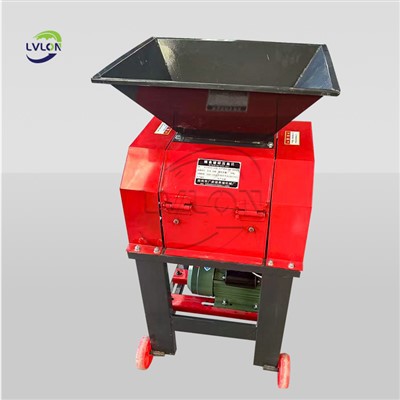
By working closely with our clients, we can provide the right equipment and technical support to ensure that the raw material particle size is carefully controlled. Our state – of – the – art grinding and screening equipment is designed to handle a wide range of feed ingredients and can be customized to meet the specific particle size requirements of each customer.
Feeding Equipment If you’re interested in optimizing your feed pellet production process by better controlling the raw material particle size, we invite you to contact us. Our team of experts is ready to discuss your needs, provide detailed information about our products and services, and help you find the best solutions for your feed pellet line.
References
- "Feed Manufacturing Technology: Compendium Volume VII". American Feed Industry Association.
- Wiseman, J. (Ed.). "Feed Milling Technology". Nottingham University Press.
- "Particle Size Analysis in Feed Manufacturing". Journal of Animal Science, various editions.
Henan Lvlon Industrial Co., Ltd.
Address: Unit 5, 5th Floor, Building 11, No. 18 Dongfeng Road, Jinshui District, Zhengzhou City, Henan Province.
E-mail: lvlonxu@gmail.com
WebSite: https://www.lvlonmachinery.com/
