Automation equipment has revolutionized the logistics industry in numerous ways, offering enhanced efficiency, accuracy, and cost – effectiveness. As a leading automation equipment supplier, I have witnessed firsthand how these technologies are transforming the way logistics operations are conducted. In this blog, I will explore some of the key application scenarios of automation equipment in the logistics industry. Automation Equipment
Warehouse Management
One of the most significant applications of automation equipment in logistics is in warehouse management. Warehouses are the heart of the logistics chain, and efficient management is crucial for timely order fulfillment.
Automated Storage and Retrieval Systems (AS/RS)
AS/RS are used to store and retrieve goods in a highly efficient manner. These systems use automated cranes or shuttles to move goods in and out of storage racks. They can operate 24/7, significantly increasing the storage density and throughput of a warehouse. For example, in a large e – commerce fulfillment center, AS/RS can quickly locate and retrieve products for shipping, reducing the time it takes to process orders. This not only improves customer satisfaction but also allows the company to handle a larger volume of orders.
Conveyor Systems
Conveyor systems are another staple in warehouse automation. They are used to transport goods within the warehouse, from receiving areas to storage locations and then to shipping areas. Conveyor systems can be customized to fit the specific layout and requirements of a warehouse. For instance, a spiral conveyor can be used to move goods between different floors of a multi – level warehouse, while a belt conveyor can be used for horizontal transportation. These systems reduce the need for manual handling, which in turn reduces the risk of accidents and improves the overall efficiency of the warehouse.
Automated Sorting Systems
Automated sorting systems are essential for warehouses that handle a large number of different products. These systems use barcode scanners, sensors, and sorting algorithms to sort products based on various criteria, such as size, weight, destination, and order priority. In a parcel sorting facility, for example, an automated sorting system can quickly and accurately sort packages onto different conveyor belts leading to different shipping trucks or distribution centers. This speeds up the delivery process and ensures that products are sent to the correct destinations.
Inventory Management
Automation equipment also plays a vital role in inventory management. Keeping track of inventory levels accurately is crucial for avoiding overstocking or understocking.
RFID Technology
Radio – Frequency Identification (RFID) technology is widely used in inventory management. RFID tags can be attached to products, pallets, or containers, and RFID readers can be installed throughout the warehouse. These readers can quickly and automatically read the tags, providing real – time information about the location and quantity of inventory. For example, when a product enters the warehouse, the RFID reader can immediately update the inventory database, eliminating the need for manual data entry. This helps in reducing errors and ensuring that inventory levels are always up – to – date.
Automated Inventory Counting Systems
Automated inventory counting systems use technologies such as 3D scanners and drones to count inventory. These systems can scan large areas of the warehouse quickly and accurately, providing a detailed inventory count. This is much faster and more accurate than traditional manual inventory counting methods. For instance, a drone can fly over the warehouse racks and use its 3D scanner to count the number of products on each rack, reducing the time and labor required for inventory audits.
Transportation Management
In the logistics industry, transportation is a critical aspect, and automation equipment is being increasingly used to improve transportation efficiency.
Autonomous Vehicles
Autonomous vehicles, including self – driving trucks and drones, are starting to make an impact on the transportation side of logistics. Self – driving trucks can operate continuously without the need for breaks, reducing delivery times and increasing the efficiency of long – haul transportation. Drones, on the other hand, are ideal for last – mile delivery. They can quickly deliver small packages to customers’ doorsteps, especially in urban areas where traffic congestion can be a problem. For example, in some areas, e – commerce companies are using drones to deliver groceries and small parcels, providing a more convenient and faster delivery option for customers.
Intelligent Transportation Systems (ITS)
ITS use a combination of sensors, cameras, and communication technologies to manage traffic flow and optimize transportation routes. In a logistics fleet, ITS can be used to monitor the location and status of vehicles in real – time, adjust routes based on traffic conditions, and provide drivers with optimal driving instructions. This helps in reducing fuel consumption, improving delivery times, and increasing the overall efficiency of the transportation network.
Order Fulfillment
Order fulfillment is the process of receiving, processing, and delivering customer orders. Automation equipment has made significant improvements in this area.
Picking Robots
Picking robots are used to pick products from the warehouse shelves and prepare them for shipping. These robots can be programmed to move around the warehouse, locate the products, and pick them using grippers or suction cups. In a high – volume order fulfillment center, picking robots can work alongside human workers, increasing the picking speed and accuracy. For example, some e – commerce companies use picking robots to pick products in bulk during peak shopping seasons, ensuring that orders are processed quickly.
Packing Machines
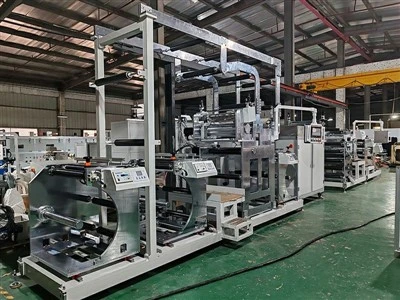
Packing machines are used to pack products into boxes or containers for shipping. These machines can automatically measure the size and shape of the products, select the appropriate packaging materials, and pack the products securely. This not only improves the efficiency of the packing process but also ensures that the products are well – protected during transportation.
Contact for Procurement
Laboratory Equipment As an automation equipment supplier, I am well – aware of the diverse needs of the logistics industry. The automation solutions I offer are tailored to improve your logistics operations, from increasing warehouse efficiency to optimizing transportation routes. If you are interested in enhancing your logistics processes through automation, I encourage you to reach out for a procurement discussion. Whether you are a small – scale logistics provider or a large multinational company, I can provide the right automation equipment and support to meet your specific requirements. Contact me to learn more about how our automation solutions can transform your logistics business.
References
- Bartholdi, J. J., & Hackman, S. T. (2018). Data-Driven Warehouse Management. Springer.
- Christensen, M. (2016). Warehouse Automation: A Guide to Improving Efficiency and Productivity. CRC Press.
- Gu, J., Goetschalckx, M., & McGinnis, L. F. (2007). Research on warehouse operation: A comprehensive review. European Journal of Operational Research, 182(2), 1 – 29.
- Silva, G. M., & Borenstein, D. (2015). Autonomous vehicles technology: A review. IEEE Transactions on Intelligent Transportation Systems, 16(6), 2474 – 2484.
Dongguan Innate Intelligent Technology Co., Ltd.
With abundant experience, we are one of the most professional automation equipment manufacturers in China. With a professional production team, we are able to meet the needs of the majority of our customers. Please feel free to buy advanced automation equipment made in China here from our factory. Customized orders are welcome.
Address: Room 201, Building 4, No. 92, Fenghuang Road, Dalingshan Town, Dongguan City, Guangdong Province
E-mail: 13316631159@163.com
WebSite: https://www.getinnater.com/
