If you’ve ever stood in a production lab or factory floor staring at a stack of mixers and wondering, “Wait, will this thing even work for my exact task?” — trust me, I’ve been there. I run a chemical mixing & dispersion supply company, and most of my calls start with someone panicking because a mixer they bought online or from a general hardware supplier is totally wrong for their specific chemical job. It’s way easier than you think to skip the basics and make a costly mistake, so let’s break this down like we’re grabbing coffee and troubleshooting a project, not writing a textbook. Chemical Mixing & Dispersion

First off, stop looking at mixers as “one-size-fits-all” tools. That’s the biggest lie I see. Last quarter, a guy hit me up super frustrated because he bought a high-speed disperser for making a food-grade liquid fertilizer, and it was shredding the nutrient chelates instead of mixing them evenly. Turns out he didn’t account for two tiny things: the viscosity of his final mix and how fragile his active ingredients were. Those two factors alone will narrow your options more than anything else, so let’s start there.
Let’s talk viscosity first, because that’s the non-negotiable first check. If your chemical mix is thinner than water—think low-viscosity things like dilute disinfectants or liquid cleaners—you need a mixer that’s built to handle thin fluids without creating dead spots. Dead spots are those random spots in your tank where stuff just doesn’t move, right? If you’re mixing something like a 10% bleach solution, a simple propeller mixer usually works here. I’ve recommended them for clients making all-purpose cleaning sprays for decades, and they’re cheap, low-maintenance, and don’t overcomplicate things. But here’s the catch: if your mix gets thicker, like between 1,000 and 10,000 centipoise (cP)—that’s the viscosity range for things like paint bases, thick adhesives, or some slurry fertilizers—propellers will suck. They’ll just spin in place, creating a vortex that pulls air in and doesn’t blend the thick stuff at the bottom. For that range, I usually point people to turbine mixers, especially axial flow turbines. They push fluid in a straight line, so they get that top-to-bottom circulation even in thicker mixes. I had a client last year making a thick wall patch compound that kept separating in the barrel—switched from a prop to a turbine, and the separation? Gone. Total game-changer.
Now, if you’re dealing with even thicker stuff—like 10,000 to 1,000,000 cP, that’s things like gel cosmetics, heavy industrial coatings, or paste-like chemical blends—turbines still won’t cut it. That’s where helical ribbon mixers come in. Those big, spiral-shaped blades literally wrap around the inside of the tank, scraping the walls as they turn, so they can move super thick, pasty stuff without leaving unmixed chunks. I once worked with a company making a silicone sealant that was so thick, you could barely pour it out of a bucket. Their old mixer was just spinning and making noise for 2 hours with no results. We swapped in a helical ribbon, and they got a homogeneous batch in 45 minutes. Worth every penny, trust me. And if you go even thicker than that? Wait, no—most chemical mixing tasks max out around 1 million cP, and at that point, you might even need a kneader, but that’s for super specialty stuff, not the day-to-day tasks most people call me about.
Next, forget viscosity—let’s talk about what you’re actually mixing. It’s not just liquids, right? A lot of people need to disperse solids into liquids, or two different liquids that don’t mix easily (like oil and water for emulsions), or even gases into liquids. That’s where “dispersion” vs “mixing” matters, because they’re two totally different jobs, even if people use the word interchangeably.
If you’re dispersing solids—like pigment into a paint base, or calcium carbonate into a slurry—you need shear, not just circulation. Shear is that force that pulls solid particles apart so they don’t clump together. A turbine mixer has some shear, but if you need more, you want a high-shear mixer, sometimes called a rotor-stator mixer. They have a spinning rotor inside a fixed stator with tiny holes, so the material gets forced through those holes at super high speed, breaking up clumps instantly. Last year, a client making water-based acrylic paint was getting visible pigment streaks even after running their batch for an hour. Switched to a high-shear mixer, and those streaks? Gone in 10 minutes. The paint was uniform, no extra work needed. That’s the power of matching the shear to your dispersion task.
But wait—what if your solids are super fine, or your active ingredients are fragile? Too much shear will break them down, making them ineffective. That’s the mistake the fertilizer guy made I mentioned earlier. If you’re mixing something that has heat-sensitive or shear-sensitive materials—like biotech buffers, food additives, or certain pharmaceutical chemicals—you want a low-shear mixer, usually an anchor mixer or a mild turbine. They turn slower, so they don’t generate extra heat or break delicate molecules. I once had a client making a probiotic supplement liquid—they used a high-shear mixer once and killed 90% of the good bacteria. Switched to an anchor mixer that ran at half the speed, and the bacteria count stayed exactly where they needed it. That’s the balance you have to strike: enough force to blend, not so much that you ruin the product.
Another big one: the type of mixing you need—batch vs continuous. A lot of new suppliers don’t mention this, but it’s make-or-break. If you’re making small batches, like a lab or a specialty chemical shop that makes 50-gallon runs a week, a portable mixer is perfect. You can just clamp it to the top of your tank, lift it out when you’re done, no permanent installation. I sell a ton of these to small craft chemical companies and lab teams. But if you’re doing high-volume, like a factory making 10,000 gallons a day of a detergent or a fertilizer, you need an in-tank mixer or a continuous inline mixer. Inline mixers are plumbed right into your pipe line, so as the material flows through, it mixes or disperses it on the fly—no need to hold a big tank full of material while it’s mixing. That’s way more efficient for high-output jobs, and cuts down on labor time.
Wait, let’s not forget tank size and shape. This is a small detail that so many people overlook, but it changes everything. If you have a tall, narrow tank, you need a mixer that can reach all the way to the bottom. A short prop that only reaches halfway will leave unmixed sludge at the bottom. If you have a wide, shallow tank, a big helical ribbon might not fit, and a turbine that’s too wide will scrape the sides or create too much drag. Also, if your tank has baffles—those little plates sticking out the side to stop vortexing—your mixer has to account for that. I once sent a client a mixer that worked great in a test tank without baffles, and it was terrible in their production tank that had baffles. We adjusted the impeller size, and it worked like a charm. Always tell your mixer supplier exactly what your tank looks like, not just how big it is.
Now, let’s talk about common mistakes I see all the time, so you can avoid them. First, buying the cheapest mixer you can find. The $200 propeller from Amazon might work for mixing water, but if you’re mixing a thick chemical with solids, it’ll burn out the motor in a week, or leave you with bad batches. Second, guessing at viscosity. Don’t just say “it’s a thick liquid”—go test it with a cheap viscometer, or send a sample to your mixer supplier. I can tell you exactly what you need just from a viscosity reading and a quick description of your ingredients. Third, not accounting for downstream steps. If your mix has to go through a filtration step, don’t leave big clumps in it—you’ll clog your filters. If it’s going into a packaging line that needs a consistent viscosity, your mixer has to keep it that way, not just get a one-time good mix.
And hey, if you’re working with a super unique chemical, something corrosive? That’s another layer. If your mix has acids or bases that eat through metal, you need a mixer with a lined impeller or a stainless steel body, not a cheap plastic one that will dissolve. I had a client making a nitric acid solution once—they used a regular steel mixer, and it corroded so bad, it broke off mid-batch and fell into their tank. That cost them thousands in ruined material and downtime. So material compatibility is non-negotiable, too—don’t skip that.
Look, I get it—this stuff can feel overwhelming. You just need a mixer that works for your specific task, not a generic model. That’s why my team doesn’t just sell equipment—we ask you all these questions upfront: what’s your viscosity? Are you mixing liquids, dispersing solids, or doing both? Are your ingredients fragile or corrosive? Is this a small batch or high-volume? What does your tank look like? We don’t push the most expensive mixer—we push the one that actually fits your needs. Last month, we helped a small biotech lab pick a $800 portable anchor mixer instead of a $5,000 high-shear unit, because they were mixing a fragile buffer that didn’t need extra shear. They saved money and got exactly what they needed.
At the end of the day, the worst thing you can do is waste time and money on a mixer that doesn’t work for your job. If you’re not sure what you need, don’t guess—reach out. My team and I have worked with everything from small craft chemical shops to big industrial factories, and we’ve seen almost every mixing task out there. We don’t use fancy jargon, we don’t upsell you on stuff you don’t need, and we make sure you leave with a mixer that will get your batches right, every single time.
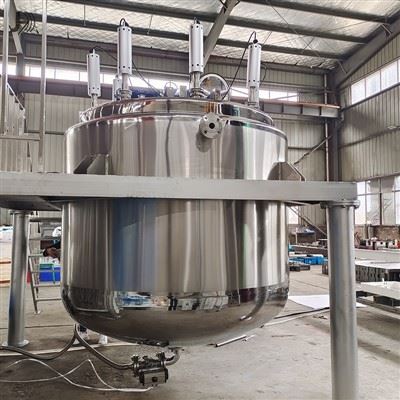
If you’re tired of bad mixes, wasted material, or mixers that break when you need them most, hit us up to chat about your task. We’ll go over your specs, answer all your dumb (and smart) questions, and help you pick the right mixer without the headache. No pressure, just real advice from people who’ve been in the chemical mixing game for years.
Ultrasonic Coating System References
- Penny, J. (2021). Selection Guidelines for Industrial Mixers and Dispersers. Industrial Mixing Magazine, 45(3), 12-18.
- Smith, A. L. (2019). Viscosity Effects on Mixer Performance for Chemical Processing. Journal of Chemical Engineering Practice, 17(2), 89-95.
- Rodriguez, M. T. (2022). Shear Requirements for Dispersion of Solid Particles in Liquid Media. Particle Technology and Research, 10(4), 211-217.
- Lee, S. K. (2020). Material Compatibility in Mixing Equipment for Corrosive Chemicals. Corrosion Science Journal, 62(1), 33-40.
Hangzhou Precision Machinery Co., Ltd.
Hangzhou Precision Machinery Co., Ltd. is one of the most reliable manufacturers and suppliers of chemical mixing & dispersion machinery in China, also supports custom service. With abundant experience, we warmly welcome you to buy advanced chemical mixing & dispersion machinery from our factory.
Address: NO.1, 10th Rd. Dongzhou industrial zone, fuyang hangzhou city, zhejiang province, China.
E-mail: abby@jh-ultrasonic.com
WebSite: https://www.jh-ultrasonic.com/
