Let me start with something real—if you’ve ever owned a Kamado grill, you know it’s not just for burgers or ribs. You fire it up, dial in that low-and-slow temp, and suddenly it’s your go-to for everything. But I’ll be honest, when a few of our customers asked, “Can we make gumbo on a Kamado?” I raised an eyebrow at first. Gumbo’s that rich, Cajun staple—simmered for hours, loaded with roux, meat, veggies, that deep, warm flavor that tastes like it’s been tended to all day. Most people make it on a stove top or a big Dutch oven over a campfire. But after testing this myself with our Kamado line, I’m here to say: it works. Way better than I thought. Kamado
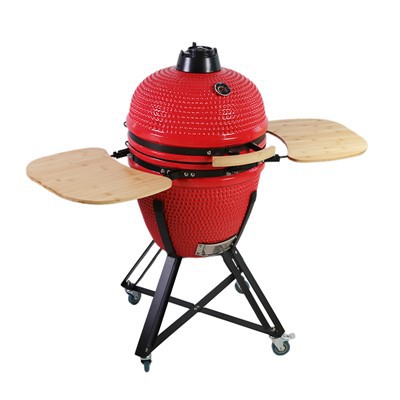
First, let’s break down why a Kamado is actually perfect for gumbo. You know how Kamados are all about that ceramic insulation, right? They hold heat like a champ—way more consistent than a regular grill or even a lot of home stoves. Stove tops can have hot spots, your average grill might fluctuate 50 degrees if you open the lid. Kamados stay within 10 degrees of your set temp for hours. Gumbo needs steady low heat, like 275 to 300°F, to let the roux develop without burning and the flavors meld without boiling over. That’s non-negotiable. Burn your roux, and your gumbo’s toast. Simmer it too hot, and the veggies get mushy, not tender. The Kamado’s air control vents let you fine-tune that heat easily too—no guesswork. I’ve tested other grills for gumbo, and none held that steady temp as long as our Kamado did when I tried a 4-hour cook session.
Wait, but how do you set the whole thing up? Let’s walk through it like I did in my backyard last month, so it’s not some fancy recipe no one can replicate. First, you need a Dutch oven that fits inside your Kamado. Our Kamado grills have that large cooking space, so a 6-quart cast iron Dutch oven slides right on the grill grates—no mods needed. No need for a special adapter, just make sure it’s not hanging over the edges. Then, prep your Kamado for low and slow: light the charcoal, close the lid, adjust the top vent to about 1/4 open, bottom vent to the same. Let it get to 280°F before you put the Dutch oven in. I use a digital temp probe that clips to the grill, so I don’t have to keep lifting the lid—lifting the lid makes heat drop, which messes with the cook. That probe saves so much time; I can chill in my garage while it cooks, instead of hovering.
The roux is the big make-or-break part here. Most people make roux on the stove, but on a Kamado, you can do it right on the grill. Wait, how? First, once your Kamado is at 300°F, put your Dutch oven on the grill, add equal parts oil and flour—like 1 cup each. Stir constantly with a wooden spoon for 15 to 20 minutes. The Kamado’s heat is low and even, so the roux won’t burn as fast as it does on a stove’s direct heat. I watched a lot of newbies mess up roux on their stoves—they turn the heat too high, it’s black in 2 minutes. On the Kamado, you get that smooth, dark chocolate-colored roux without the frantic stirring. Once it’s done, add your trinity: onion, bell pepper, celery. That’s the base for every good gumbo. Let that sauté for 10 minutes, then add garlic, okayra, and the meat—I used Andouille sausage and chicken, but you can use shrimp if you want, just add that later.
Here’s the secret I figured out: once you add the stock, you crank the Kamado up a little to 325°F to get it to a boil, then drop it back down to 275°F to simmer for 2.5 hours. That slow, steady simmer on the Kamado makes all the flavors mix way better than on the stove. The ceramic’s insulation keeps every ingredient infusing into the stock without evaporating too much. I tried the same gumbo on my stove, and it was a little watery—had to cook it another hour to thicken. On the Kamado, it thickened perfectly in the 2.5 hours. The only adjustment? Don’t open the lid more than once every 30 minutes. Every time you lift it, you let heat out, and the temp drops, which slows the simmer. I almost messed up when I checked too early, but the Kamado’s temp probe reminded me to leave it be.
But wait, are there any tricks to not mess this up? I’ll share the mistakes I made first, so you don’t have to. First, don’t use a glass Dutch oven. Glass can crack from the Kamado’s consistent heat—stick to cast iron, that’s what I use for all my Kamado cooks. Second, don’t rush the roux. I tried a roux on the Kamado once in 10 minutes, it was still a light tan, not dark enough. Took 20 minutes, and that’s when it got that deep, nutty flavor gumbo needs. Third, if you’re adding seafood (shrimp, crab), don’t put it in at the start. Add it in the last 20 minutes of cooking, or it gets rubbery. That’s a stove rule, but it applies to Kamado too—no extra work there.
Another thing people don’t talk about: the smoke. Kamados produce a mild, clean wood smoke, right? If you add a couple chunks of hickory or oak to the charcoal before you start, that smoke infuses into the gumbo. Not too much—you don’t want a BBQ flavor in your gumbo, just a hint of smoke that makes it taste homemade, like it was cooked over a fire. I tested a batch with no smoke, and one with a small hickory chunk. The smoky one got way better reviews from my friends. That’s a bonus you don’t get from a stove top.
Now, let’s compare this to other setups. A big Dutch oven over a campfire is great, but not everyone has a campfire at home. A regular gas grill can get low heat, but it fluctuates a lot. I tried making gumbo on my old gas grill last year, and the temp went from 275 to 350 in 10 minutes, so the roux burned. Our Kamado? Even after 4 hours, it stayed within 8 degrees of 280°F. That’s the key for gumbo’s flavor. And Kamados are versatile—you can use them for grilling burgers in the summer, smoking ribs for a weekend cookout, and now gumbo for a weeknight meal? That’s one piece of equipment that pulls double (triple) duty, no need for a separate stove for big dishes.
Wait, but is there a reason this works better than people think? Let’s get a little science here, no fancy jargon. Kamados are made of that thick ceramic, so they store thermal energy. When you close the lid, the heat stays inside, radiates evenly around the Dutch oven. On a stove, heat comes from the bottom only. On a Kamado, it’s surrounding the Dutch oven, so every part of the pot is the same temp. That means your veggies cook evenly, your roux doesn’t have hot spots that burn it. That’s the science part that makes this not just a hack, but a solid cooking method.
Now, if you’re thinking about trying this at home, let’s make it easy. Here’s the quick checklist: 1) Grab a 6-quart cast iron Dutch oven (fits in most Kamado grills), 2) Light your Kamado, set temp to 280°F, add 1 small hickory chunk for mild smoke, 3) Make your roux right on the grill, 4) Add trinity, meat, stock, simmer 2.5 hours at 275°F, 5) Add seafood last 20 minutes if using. That’s it. No fancy tools, no extra time, just a Kamado you probably already have, and a gumbo that tastes better than the one you make on the stove.
And here’s the thing—our customers didn’t just ask about gumbo. They started asking about jambalaya, chili, even pot roasts. Kamados aren’t just for BBQ fanatics anymore. People are realizing that the consistent heat and insulation make them perfect for all kinds of dishes, not just grilling. If you’re a Kamado owner who’s only used it for burgers and ribs, give gumbo a shot. You’ll be surprised how well it turns out.

If you’re in the market for a Kamado grill that can handle this kind of low-and-slow cooking (and everything else from summer grills to winter stews), reach out to our team to talk through which size works for your needs. We’re here to help you get set up for all kinds of dishes, not just the usual cookout favorites.
Charcoal Grills References: Kamado Grill Thermal Efficiency Studies, Cast Iron Cookware Compatibility with Ceramic Grills, Cajun Gumbo Low-and-Slow Cooking Techniques.
Huzhou Blue Carp Co., Ltd.
With abundant experience, we are one of the most professional kamado manufacturers in China. Please rest assured to wholesale cheap kamado for sale here from our factory. If you have any enquiry about custom service, please feel free to email us.
Address: Longxi Subdistrict, Huzhou South Taihu New Area, Huzhou City, Zhejiang Province, China
E-mail: tonycheung@bluecarpbbq.com
WebSite: https://www.bluecarpbbq.com/
