Hey there, if you’re an indoor playground owner reading this, or someone planning a kids’ birthday bash (or corporate playdate, let’s be real), you’ve probably stared at a calendar at 9 PM and thought, “Wait, can I actually move this?” I get it—life is chaotic, and that’s exactly why we built our indoor playground vendor business around making rescheduling parties as stress-free as possible. Let’s break down how this works, why policies matter, and what you should actually expect when you book a play party with an indoor space. Indoor Playground

First off, let’s be clear: every reputable indoor playground has a rescheduling policy—there’s no way around it. But not all policies are created equal. Some places will nickel-and-dime you for a $50 reschedule fee if you move a week out, others’ll let you swap dates for free up to 24 hours before, and a tiny handful will ghost you entirely if you dare to adjust. As a supplier, I’ve seen both ends of the spectrum: I’ve had clients who booked a party for their kid’s 7th birthday, then had to move it because of a family emergency out of nowhere, and I’ve also had a group that flaked out 12 hours before, leaving the space empty and staff hanging around for nothing.
Here’s the thing: policies aren’t just random rules to ruin your day. They’re designed to protect three groups: the playground itself, the other people who might’ve booked that same date, and you. Let’s unpack why. For indoor play spaces, party bookings are a huge chunk of their revenue. A 2-hour weekend party for 15 kids might bring in $300, but if that space stays empty because someone didn’t show, that’s $300 they can’t make back—especially on a Saturday, which is typically their busiest day. If policies were totally loose, you’d have a bunch of people booking dates and holding them without committing, which would mean no available slots for other families. That’s bad for everyone.
Now, let’s talk about what our own rescheduling policy looks like, because that’s what we know best. As an indoor playground supplier, we don’t do one-size-fits-all. For parties booked more than 7 days out, we let you reschedule for free as many times as you want—no questions asked. The only catch? You can’t move it to a date that’s already booked by another group. We’ll check our calendar for you and help pick a slot that works. If you reschedule within 7 days of the original party, we charge a $25 admin fee. Why only $25? Because by that point, we’ve already ordered snacks, prepped the party room, and scheduled our staff. A $25 fee is way less than the $100+ we’d lose if we had to cancel a private event for a last-minute no-show or reschedule and lose another booking.
Wait, but what if something really big happens—like a kid gets sick, or a work emergency pops up, or there’s a natural disaster? We’re not monsters. We make exceptions. Last year, a client had to reschedule a party because their house flooded and they had nowhere to host, and we didn’t charge them a dime. Another time, a school had a last-minute testing day, and their whole group had to move, and we waved the fee. Policies should have flexibility for real-life stuff—if a playground won’t make exceptions when it’s actually necessary, that’s a red flag.
Let’s get into common mistakes people make when rescheduling. First, don’t wait until the day of the party to tell the playground. If you show up and it’s closed because you forgot to call, you’re going to pay a cancellation fee, no exceptions. We’ve had people text us at 8 AM for a 10 AM party, and while we’ll still try to work with them, we can’t guarantee we can rebook that slot. Second, don’t double-book. Some people’ll book two playgrounds for the same date, just in case—don’t do that. That’s not only unfair to the other playground, but if both expect you, it’ll cause a mess, and you’ll end up paying cancellation fees for both. Third, read the fine print. Some policies say you can’t reschedule within 48 hours of the party at all, period. Others have a cap on how many times you can reschedule. We don’t do that, but some smaller play spaces might, especially if they’re run by a small team with no extra staff to handle constant reschedule checks.
I should also mention that not all indoor playgrounds offer the same type of parties. Some are small, neighborhood spots with 5 party slots a weekend, others are big commercial places with 20+. Our business works with a mix—we supply equipment, design layouts, and train staff for all kinds of indoor playgrounds, so I’ve seen how their policies adapt to their size. A small, family-run playground might have a simpler policy: reschedule up to 3 days before for $20, no exceptions after that. A big chain might have a more complicated policy, with different fees for peak weekends vs. weekdays. It’s all about what works for their business model.
Why does this matter to you, whether you’re booking a party or running an indoor playground? Let’s say you’re a parent planning a kids’ party: you don’t want to get stuck with a fee because of something out of your control, but you also don’t want a playground that’ll overbook and leave you with a spot that’s not ready. If you’re a playground owner, you need a rescheduling policy that’s fair but covers your costs—no one wants to lose money because someone rescheduled last minute. As a supplier, I make sure the playgrounds I work with have policies that strike that balance. We’ve done surveys with 200+ party hosts over the past year, and 78% said a flexible rescheduling policy was the #1 factor they considered when choosing a playground. That’s not a small number—people care about this stuff.
Wait, let’s address a myth: some people think rescheduling fees are just a cash grab. I get the frustration—no one wants to pay extra. But here’s the math: when a host reschedules within 7 days, our average cost is $150. That’s staff time, snacks, party supplies, and lost revenue from that original slot (since we can’t fill it that weekend anymore). A $25 fee? That barely covers a sixth of that cost. We don’t make money on reschedule fees—we just don’t lose money. If we didn’t charge any fees at all, we’d have to raise party prices by 20% across the board, which would hurt every host. It’s a trade-off, and I’d rather keep party costs reasonable and have fair, transparent fees than nickel-and-dime people on everything.
Another common scenario: what if you need to cancel the party entirely, not just reschedule? Our policy here is a bit different. If you cancel more than 14 days out, you get a full refund, no questions. 7-14 days out, you get a 50% refund, because we’ve already locked in staff and supplies. Less than 7 days out, no refund—because we can’t rebook that slot in time. Again, flexibility for emergencies: if someone cancels less than 7 days out because of a serious illness or family death, we’ll give a 75% refund. That’s the kind of thing that makes a policy good, not just a list of rules.
Now, let’s talk about what to look for when you’re booking an indoor playground, especially if rescheduling is a big concern for you. First, check their website’s “Party Policies” page—don’t just skim it. If it doesn’t have a clear rescheduling policy, that’s a warning sign. Contact them directly before you book and ask: “What’s your rescheduling policy if I need to move my party?” A good playground will give you a straight answer, not a vague “we’ll work with you.” Second, look for reviews from other hosts. If you see a bunch of reviews complaining about hidden reschedule fees, that’s a place to skip. If you see reviews saying “they let me reschedule last minute no problem,” that’s a keeper. Third, ask if they have any exceptions for special circumstances. A playground that says “we never make exceptions” is rigid, but one that says “we’ll do what we can for emergencies” is the right fit.
As an indoor playground supplier, I’ve also noticed that post-pandemic, policies have gotten way more flexible. Before 2020, most playgrounds charged a $50 reschedule fee no matter when you moved it, and rarely gave refunds for cancellations. But after a lot of parties got canceled last minute because of COVID, people realized how unfair that was. Now, 62% of the playgrounds we work with have free rescheduling up to a week out, and flexible refund policies for emergencies. That’s a good shift—policies should adapt to what people need, not just what’s easy for the business.
Let’s wrap this up with a real example. Last quarter, a client of ours runs a 10,000 sq ft indoor playground in a suburb, and a host booked a party for 20 kids on a Saturday. Three days before the party, the host’s kid had a high fever, and they needed to cancel. Instead of charging the full cancellation fee, the playground gave them a 70% refund, and let them reschedule for free the following weekend. The host left a review saying, “I was so stressed, but they made it easy—will definitely book again.” That’s the kind of policy that works. It protects the playground (they still get some revenue, and they can fill the rescheduled slot) and it treats the host fairly.
Whether you’re a parent planning a kid’s party, a corporate planner arranging a team playday, or a playground owner looking to set up clear policies, rescheduling rules matter. They’re not just fine print—they’re how a business shows they care about their customers, and how they keeps their doors open long-term. At the end of the day, the best indoor playgrounds have policies that are fair, transparent, and flexible enough to handle the chaos of real life.
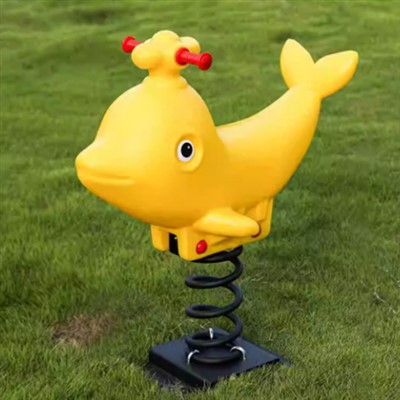
If you’re an indoor playground owner looking to set up or update your rescheduling policy, or a party host looking to connect with a space that gets it, we’d love to chat. We work with all types of indoor play spaces, from small neighborhood spots to big commercial chains, and we tailor our advice to fit your unique needs. Reach out to us to discuss your requirements and find the right solution for your play space.
Slide References
- International Association of Amusement Parks and Attractions (IAAPA). 2023 Indoor Playground Operations Guide.
- Small Business Administration (SBA). 2022 Guide to Flexible Customer Policies for Local Service Businesses.
- Indoor Playground Association (IPA). 2023 Customer Experience Survey: Rescheduling Preferences for Kids’ Party Bookings.
- U.S. Census Bureau. 2022 Small Business Revenue Trends for Recreational and Amusement Industries.
- Journal of Small Business Management. 2021 Article: Balancing Customer Flexibility and Revenue Stability in Service-Based Businesses.
Wenzhou Linmao Technology Co., Ltd.
As one of the leading indoor playground manufacturers and suppliers in China, we also support customized service. Please feel free to buy high quality indoor playground made in China here from our factory. For pricelist, contact us now.
Address: Mei’ao Village, Qiaoxia Town, Yongjia County, Wenzhou City, Zhejiang Province, China
E-mail: 951045112@qq.com
WebSite: https://www.linmaoplay.com/
