If you’d asked me five years ago what I thought auto plastic parts were for, I’d have listed the usual stuff: bumpers that dented instead of crumpling, interior door panels that withstood coffee spills, gauges that didn’t shatter if you hit a pothole. As a supplier who’s been in this game for 12 years, I’ve got bins full of injection-molded polypropylene, ABS, and thermoplastic olefin (TPO) that for decades just did the “workmanlike” job—hold something, cover something, absorb a little impact. Then about three years ago, a client of mine who builds electric vehicles (EVs) sent me a sketch that didn’t look like a part at all. It looked like a grid. Not a grille—an underbody panel. Turns out, that grid was innovative before I even knew what the word meant for our industry. Auto Plastic Parts

I didn’t get it at first. “Underbody panels are flat,” I told my contact, Sam, over the phone. “You’ve been doing them for two years with our stock material. Why change it?” Sam laughed. He’d been in automotive aerodynamics long enough to know that every millimeter of drag adds up to range for EVs. That grid wasn’t decorative. It was designed to channel air flow under the car, cutting drag by 8% on that model’s highway cycle. And that part wasn’t made from a thick, rigid plastic like most underbody armor—it was a lightweight, high-density polyethylene (HDPE) blend we’d never tested before, reinforced with short glass fibers to keep it stiff without weighing down the battery. That project changed how I look at every plastic part in our catalog. It wasn’t just a replacement for metal anymore. It was a solution to a problem no one was asking our industry to solve.
Now, when I walk our manufacturing floor at 6 a.m.—when the injection molding machines are humming and the line workers are setting up for the day—I see innovative uses of auto plastic parts everywhere, not just in R&D labs. Last month, we shipped a batch of door sills to a compact SUV maker that had a secret: each one has a tiny, molded channel that routes stray rainwater or spilled soda toward the car’s underfloor drain, instead of letting it seep into the interior wiring. That’s not a “plastic part improvement”—that’s a plastic part doing a job two other parts used to do. The client told us it cut their interior assembly time by 11 seconds per car. That’s 11 seconds that doesn’t add up when you’re making 500 cars a day.
Even the stuff that feels ordinary these days has gotten a makeover. Take the center console cup holder, for example. Ten years ago, it was a basic circle with a spring-loaded insert. Now, we make cup holders for a European luxury brand that have a molded thermal barrier in the base—plastic with a tiny layer of air pockets trapped during molding—so a hot latte doesn’t warp the plastic around it or transfer heat to the center console’s touchscreen. The team at that brand told us their warranty claims for interior heat damage dropped by 22% in the first year they switched to our parts. That’s the kind of win that makes me proud: not just selling plastic, but solving a small, annoying problem that used to cost car companies money.
What’s funny is that most of these innovations don’t start with a big research grant. They start with a client saying, “This is broken. Can your plastic parts fix it?” A few months back, a small startup that makes delivery vans hit me up because their metal battery trays were corroding after a year of driving in salted winter roads. Metal, even galvanized, can’t hold up to that kind of constant exposure. I suggested a plastic battery tray—high-impact polycarbonate, molded to fit the battery’s exact shape, with molded-in mounting points that replace the metal brackets they were adding. The startup was skeptical at first; they thought plastic would be too flimsy. But when we tested a prototype in our salt spray chamber (we built that two years ago after three clients asked for it), the tray didn’t corrode at all. And it cut the van’s overall weight by 17 pounds, adding 2 miles per gallon on delivery routes that stop and start every block. That part wasn’t in any textbook. We worked out the mix of plastic, the wall thickness, even the molded-in drain holes together, right over a series of Zoom calls.
I’ll be honest—there’s a lot of hype around EVs and plastic parts right now. Everyone’s talking about how we can replace 50% of a car’s metal with plastic by 2035. But the real innovation is the stuff that’s not on press releases. Last quarter, we made a set of interior door panels for a family minivan that have molded-in storage pockets for tablet devices—shaped exactly to fit an 11-inch iPad, with a soft TPO liner so it doesn’t scratch. No more loose tablets rolling around the floor or kids reaching back to grab them. That’s plastic doing something that never even needed to be done before iPads were standard road trip gear.
Another use that’s flying under the radar: plastic parts that double as electrical insulation. A few years ago, we worked with a manufacturer of hybrid vehicles that needed to protect the high-voltage wiring that runs between the engine and the battery. They were using fabric sleeves that had to be cut and wrapped around the wiring manually—time-consuming, and prone to gaps that could cause shorts. We molded a custom plastic conduit that snaps right over the wiring, with molded-in slots that fit perfectly without any extra work. The client’s labor costs for that part dropped by 40%, and we haven’t had a single insulation failure reported in the 18 months since we started shipping. That’s not a futuristic innovation—it’s a better way to make something that’s been around for decades.
I’ve heard some people say that innovative auto plastic parts are just “replacing metal with plastic.” But that’s selling it short. Plastic can do things metal can’t. It can be molded into complex, single-piece shapes that would require three or four metal parts, cutting down on assembly and failure points. It can be formulated to be lightweight, which is huge for fuel economy and EV range. It can be textured, colored, or even molded with hidden features that only make sense once you use the part. The underbody grid we made for that EV, for example—no metal part could be that light, that stiff, and that perfectly shaped to channel air flow. A metal version would weigh twice as much, and take three times as long to weld into place.
We don’t just make parts here. We work with our clients as partners. When a small startup comes to us with a problem that no one’s solved before, we don’t just quote a price and ship a standard part. Our engineers sit down with their engineers. We test prototypes in our facilities. We adjust the plastic blend, the mold, even the way the part is installed to fit their needs. That’s why we’ve been around for 12 years, and why 80% of our business is repeat clients. They know we’re not just a supplier—we’re the guys who will stay late to fix a prototype that’s failing in testing.
Lately, I’ve been getting a lot of calls from clients asking about recycled plastic parts. That’s another innovation I’m happy to be part of. We now make 25% of our injection-molded parts from post-consumer recycled plastic, sourced from old car bumpers and water bottles. We’ve tested these parts to meet all the same safety and durability standards as our virgin plastic parts—so they’re not a “green gimmick.” They actually perform the same, cost almost the same, and help car companies hit their emissions and sustainability goals. A major Japanese automaker started using our recycled plastic floor pans last year, and they told us it helped them hit a target of using 20% recycled material in their interior parts. That’s the kind of innovation that matters: it’s good for business, good for clients, and good for the planet.
I know there’s still a lot of work to do. A few months back, a client asked us to make a plastic engine cover that can withstand 500 degrees Fahrenheit. Most plastics start to melt at 300 or 400 degrees. We’re still working on the right blend—probably a high-temperature polyamide with some advanced additives. But that’s the fun part, right? The stuff that hasn’t been done yet. That’s where the real innovation lives.
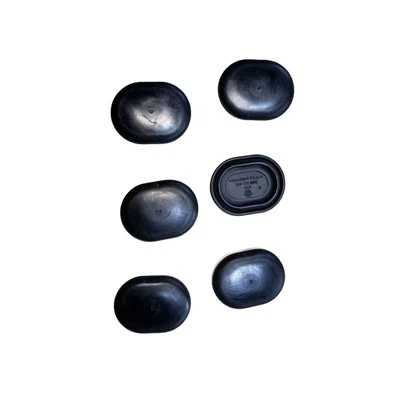
If you’re someone who works in auto manufacturing, or runs a startup that’s designing new vehicles, or even just someone who’s tired of parts that break or don’t work the way they should, let’s talk. Our team’s got the experience, the testing facilities, and the willingness to work outside the box to solve your problems. We don’t do standard parts for the sake of standard. We do plastic parts that work, that save you time and money, and that maybe even change how cars are built. Reach out to our team to discuss your next project. We’d love to hear from you.
Plastic Auto Parts References:
- National Highway Traffic Safety Administration. (2022). Lightweighting Technologies for Passenger Vehicles. U.S. Department of Transportation.
- Society of Plastics Engineers. (2023). Automotive Plastics Market Trends and Innovation Report. Society of Plastics Engineers.
- International Energy Agency. (2022). Global EV Outlook 2022: Road Transport Electrification. International Energy Agency.
- Automotive News. (2023). Lightweighting Drives Growth in Automotive Specialty Plastics. Crain Communications.
Ningbo Xiaohua Plastic Industry Co., Ltd.
We are one of the most experienced auto plastic parts manufacturers and suppliers in China, specialized in providing high quality customized service to global clients. We warmly welcome you to wholesale durable auto plastic parts in stock here from our factory.
Address: No. 878, Gulin Section, Yinxian Avenue, Haishu District, Ningbo City, Zhejiang Province
E-mail: 13736009355@163.com
WebSite: https://www.cnxiaohua.com/
