Hey guys, let’s cut to the chase—if you’re a homeowner, handyperson, or even a small shop owner fixing up kitchen gadgets, laundry machines, or HVAC units, you’ve definitely stared at that tiny, beat-up rubber part and thought, “What size do I even need?” As someone who’s been in the home appliance rubber products game for almost a decade, I’ve seen this mistake way too many times: grabbing a random rubber seal or grommet that “looks right,” only to get home and realize it’s either too loose (no leak protection, duh) or so tight it’ll crack when you try to install it. Trust me, I’ve shipped my fair share of wrong-sized parts to people who were just trying to replace a fridge door gasket or a washing machine drain plug, so today I’m walking you through how to measure this stuff like a pro—no fancy lab tools required. Home Appliance Rubber Products

First off, let’s get one thing straight: home appliance rubber parts aren’t one-size-fits-all, and they fall into two main categories: flexible seals (like door gaskets, hose washers, or dust seals) and rigid grommets/inserts (like the rubber feet on a dryer or the grommets that hold wire bundles tight). Each needs slightly different measurements, but I’m gonna keep it super straightforward, no jargon that’ll make your eyes glaze over. Let’s start with the tools you actually need—no need to run to a hardware store first, odds are you already have these lying around: a soft measuring tape (the ones for sewing work best, not the stiff metal ones you use for DIY decks), a digital caliper if you happen to have one (but if you don’t, a regular ruler works too), and a pen + paper to jot numbers down. Pro tip: write every measurement in millimeters, not inches—most appliance specs use mm, and it’s way more precise for small rubber parts.
Let’s tackle the most common part first: rubber seals, like the ones on your fridge door or your oven’s door. These are the ones that keep cold air in (or heat in, for ovens) so your energy bill doesn’t skyrocket. If you’re replacing a fridge door seal, stop just guessing how long it is—pull the old seal off first (gently! Most fridge seals are just clipped in, no need to yank it) and lay it flat on a table. Do not stretch it, I repeat—do not stretch it. Rubber stretches, so if you pull it to make it straight, you’ll end up with a seal that’s too short once it’s back on. Now, measure the outer length and outer width: run your soft tape along the longest edge first, then the shortest edge. For ovens, if the old seal has a hinge side, make sure you note which side that is too—some seals have a slightly different curve there, and measuring just straight length will mess you up. Another trick for round seals (like the ones around a stove’s burner or a washing machine’s inlet hose): don’t measure the circumference if you don’t have a flexible tape. Instead, measure the diameter (the straight line across the middle) of the hole it’s supposed to fit into. The circumference is π times diameter, so if you measure a 50mm diameter, that’s a ~157mm circumference, which is way easier to calculate than wrapping a tape around a tiny burner hole. I can’t tell you how many people e-mailed me saying their 150mm “circumference” seal was too small, and it turned out they measured the diameter instead of the full circle—so trust the diameter trick for round stuff, it’s game changing.
Next up: hose washers and flat rubber seals, the tiny ones that stop leaks under your sink or from your dishwasher’s connection. These are super easy to mess up because they look so small, but a 1mm difference here means a leak that’ll warp your cabinets. For these, you’ll measure three things: inner diameter (ID), outer diameter (OD), and thickness. Inner diameter is the hole in the middle—hold the washer up to a ruler and line the hole with the marks, that’s ID. Outer diameter is the total width of the whole washer. Thickness is just how thick the rubber is, from top to bottom. Pro move: if you have a digital caliper, pop that on—measurements to the tenth of a mm (like 1.2mm thick instead of 1mm) make all the difference here. Last year a guy emailed me saying his dishwasher was leaking nonstop, and it turned out he used a 1mm washer when he needed 1.5mm—too thin, so water seeped through. The next day he ordered the right size, and hasn’t had a leak since. That’s the kind of tiny detail that matters.
Now for grommets and rubber inserts, the ones that cover sharp metal edges on your washer’s wiring holes, or the rubber feet that keep your dryer from sliding across the floor. For grommets—these are the circular pieces that go through a metal or plastic panel—you need two measurements: the inner diameter (the hole that whatever’s going through will fit into) and the outer diameter (the size of the part that sits flush against the panel). Super important: if you’re running a wire through a grommet, don’t just measure the hole you see—account for the wire’s diameter too. For example, if your wire is 3mm thick, a 4mm ID grommet will fit snug, no extra slack, which keeps the wire from rubbing on metal edges. If you get a 5mm ID, the wire will wiggle, and that friction can fray the insulation over time—bad news. For rubber feet, just measure the total diameter of the foot (the round part that touches the floor) and the height from the bottom of the foot to where it connects to the appliance. I’ve had people send me photos of a foot that’s 50mm wide but only measure the top part, and the actual base of the foot is 55mm—doesn’t fit, so they have to wait another week for a replacement. Always measure the part that makes contact with what it’s supposed to, not the top.
Wait, what if you can’t find the old part? Maybe it fell in the trash when you were cleaning the kitchen, or it’s so crumbly you can’t pick it up. No stress—head to your appliance’s manual first. Most manufacturers list every rubber part size in the manual, often with part numbers, so you can cross-reference that. If you don’t have the manual, most brands have them online—just search for [appliance model] manual, and it’ll pop up. If all else fails, take a photo of the area where the part is supposed to go, and measure the hole/space with a ruler. For example, if your fridge door has a 600mm by 800mm opening for the seal, that’s exactly what you need. Just be honest about your measurements—don’t round up or down, because rubber parts are precise for a reason.
A quick note on common mistakes I see all the time: stretching seals when measuring, using stiff metal tapes that bend and give wrong round measurements, and mixing up ID and OD for grommets. Last month, a small repair shop guy brought me a bag of wrong grommets he ordered from a “big box” store, and every single one was wrong because he measured the outer hole instead of the inner one. That’s why my team always reminds customers to double-check their measurements before ordering—we’ll even help you if you send us a photo and your numbers, no pressure.
If you’re still feeling unsure, here’s a little step-by-step cheat sheet to keep in your toolbox: 1) Pull the old part if you can (gently, please—no breaking the appliance!), 2) Use a soft tape or ruler, write every number in mm, 3) For round parts, measure diameter, not circumference, 4) Double-check if it’s a seal (outer length/width), washer (ID, OD, thickness), or grommet (inner/outer diameter), 5) If no old part, check the manual or measure the empty space.
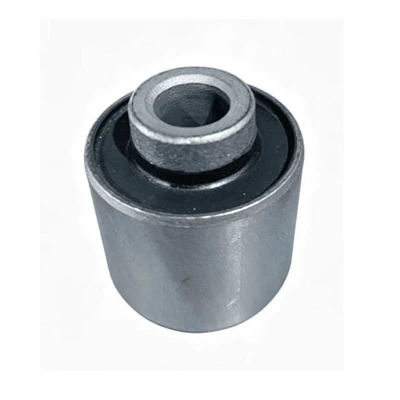
At the end of the day, getting the right size rubber part isn’t rocket science—it’s just about being precise and not guessing. As someone who’s been in this game for years, I’ve seen too many people waste time and money on the wrong part, so my team and I make it our job to help you get it right on the first try. No more waiting for overnight shipping, no more leaky fridges, no more frayed wires. If you need help measuring, or have questions about specific parts for your appliance, feel free to reach out—we’re here to make this easy for you.
Automotive Rubber Products Reference:
- ASME B42.1-2019, Specification for Rubber Gaskets and Seals for Piping and Pipeline Systems
- CPSC Handbook for Home Appliance Safety: Rubber Component Specifications, U.S. Consumer Product Safety Commission, 2021
- Rubber Product Design & Application Guide, International Rubber Association, 2022
Anhui Denaifu Auto Shock Tech Co., Ltd.
As one of the most professional home appliance rubber products manufacturers and suppliers in China, our products have good reputation in the market. Please rest assured to buy bulk high quality home appliance rubber products for sale here from our factory. Good service and punctual delivery are available.
Address: No.88 Qingshan Road, Helixi Development Zone, Ningguo City, Anhui Province
E-mail: ngzx_wxm@126.com
WebSite: https://www.denaifuauto.com/
