Precision moulds play a pivotal role in the aerospace industry, where the demand for high – quality, reliable, and precisely engineered components is non – negotiable. As a precision mould supplier, I have witnessed firsthand the stringent requirements that these moulds must meet to be suitable for aerospace applications. In this blog post, I will delve into the key requirements of precision moulds in the aerospace industry. Precision Mould
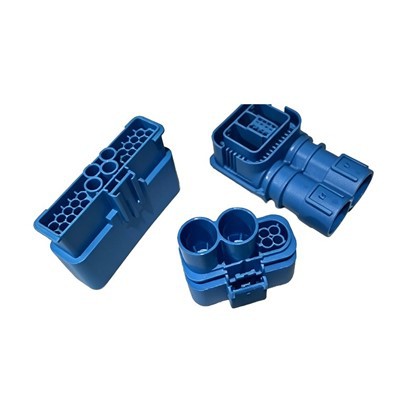
1. Material Selection and Properties
One of the fundamental requirements for precision moulds in the aerospace industry is the selection of appropriate materials. The mould materials must possess excellent mechanical properties, such as high strength, hardness, and wear resistance. This is crucial because aerospace components often require complex shapes and high – precision machining, and the moulds need to withstand the high pressures and forces during the manufacturing process without deforming or wearing out quickly.
For example, tool steels like H13 are commonly used in precision mould manufacturing for aerospace applications. H13 steel has good toughness, thermal fatigue resistance, and can maintain its hardness at elevated temperatures. This is especially important as many aerospace manufacturing processes, such as injection moulding and die – casting, involve high temperatures. Another material option is stainless steel, which offers good corrosion resistance. Since aerospace components are often exposed to harsh environments, the moulds that produce them should also be resistant to corrosion to ensure a long service life.
In addition to mechanical and corrosion – resistant properties, the material’s thermal conductivity is also a critical factor. Good thermal conductivity helps in efficient heat transfer during the moulding process, which can improve the cycle time and the quality of the final product. For instance, in the production of plastic aerospace components, a mould with high thermal conductivity can cool the plastic more rapidly, reducing the time it takes to produce each part and minimizing the chances of defects like warping.
2. Dimensional Accuracy and Tolerance
Dimensional accuracy is of utmost importance in the aerospace industry. Precision moulds need to produce components with extremely tight tolerances. Even a small deviation from the specified dimensions can lead to failures in the assembly of aerospace systems, which can have catastrophic consequences.
Aerospace components often require tolerances in the range of a few micrometers. For example, in the production of turbine blades, which are crucial for aerospace engines, the precision mould must be able to produce blades with precise airfoil shapes and dimensions. Any deviation in the blade’s shape can affect the engine’s performance, such as reducing its thrust or increasing fuel consumption.
To achieve such high – level dimensional accuracy, advanced machining techniques are employed during the mould manufacturing process. Computer – Numerical – Control (CNC) machining is widely used, which allows for precise control of the cutting tools and the ability to create complex geometries with high repeatability. In addition, Coordinate – Measuring Machines (CMMs) are used to measure and verify the dimensions of the moulds and the components produced by them. This ensures that the moulds meet the strict dimensional requirements of the aerospace industry.
3. Surface Finish
The surface finish of precision moulds is another critical requirement in the aerospace industry. A smooth surface finish on the mould not only improves the aesthetic appearance of the aerospace components but also has functional benefits.
In aerospace applications, components with a high – quality surface finish reduce aerodynamic drag. For example, in aircraft wings, a smooth surface helps the air to flow more smoothly over the wing, improving the aircraft’s fuel efficiency and performance. When it comes to moulds, a smooth surface finish also prevents the adherence of the moulded material, which can increase the ease of demoulding and reduce the risk of damage to the components during the removal process.
Polishing and texturing are common techniques used to achieve the desired surface finish on precision moulds. Advanced polishing methods, such as electrolytic polishing and diamond – wheel polishing, can produce mirror – like finishes on the mould surfaces. Texturing, on the other hand, can be used to create specific surface patterns on the aerospace components, which can have applications in areas such as anti – icing or improving grip.
4. Complex Geometries and Design
Aerospace components often have complex geometries due to the need to optimize performance, reduce weight, and meet aerodynamic requirements. Precision moulds need to be designed and manufactured to reproduce these complex shapes accurately.
For example, aerospace ducting systems have intricate shapes to ensure efficient airflow within the aircraft. The precision moulds used to produce these ducts must be able to create the complex internal and external geometries. To design and manufacture such moulds, advanced software tools like Computer – Aided Design (CAD) and Computer – Aided Manufacturing (CAM) are used. These tools allow engineers to create detailed 3D models of the moulds and simulate the manufacturing process to identify and resolve any potential issues.
In addition, the design of precision moulds must also consider the assembly process of the aerospace components. The moulds should be designed in a way that allows for easy insertion of inserts, cores, and other components during the manufacturing process. This ensures that the final aerospace product can be assembled efficiently and accurately.
5. Quality Control and Testing
Given the critical nature of aerospace components, strict quality control and testing procedures are essential for precision moulds. Every mould must undergo a series of tests to ensure that it meets the required standards.
Nondestructive testing (NDT) methods are commonly used to detect any internal defects in the moulds without causing damage. Techniques such as ultrasonic testing, X – ray testing, and magnetic particle testing can identify flaws like cracks, porosity, and inclusions. These defects, if left undetected, can lead to the failure of the mould during the manufacturing process and ultimately result in flawed aerospace components.
In addition to NDT, destructive testing may also be conducted on a sample basis. This can involve cutting the mould to inspect its internal structure and material properties. On – site testing of the components produced by the moulds is also carried out. This includes testing for dimensional accuracy, surface finish, and mechanical properties such as strength and hardness.
6. Long – term Durability and Reliability
Precision moulds in the aerospace industry need to have long – term durability and reliability. The aerospace manufacturing process is often a high – volume and continuous operation, and any downtime due to mould failure can be extremely costly.
Moulds should be designed and manufactured to withstand a large number of manufacturing cycles without significant wear or damage. This requires proper heat treatment of the mould materials to enhance their hardness and toughness. Additionally, regular maintenance and refurbishment of the moulds can extend their service life.
A reliable mould supplier should offer a comprehensive warranty and after – sales service. This includes providing technical support, spare parts, and repair services. By ensuring the long – term durability and reliability of the precision moulds, we can help aerospace manufacturers reduce production costs and improve the overall efficiency of their manufacturing processes.
Connect with Us for Your Aerospace Precision Mould Needs
As a precision mould supplier with extensive experience in the aerospace industry, we understand the unique requirements of this sector. We are committed to providing high – quality precision moulds that meet all the stringent requirements mentioned above.
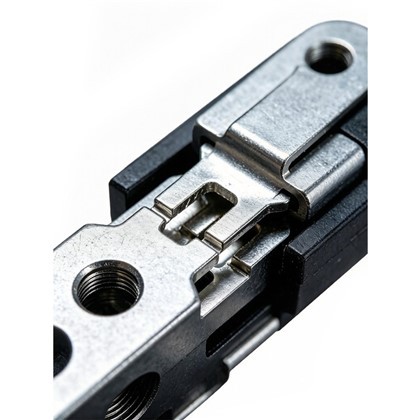
We have a team of highly skilled engineers and technicians who use the latest technologies and manufacturing processes to produce precision moulds. Our state – of – the – art facilities are equipped with advanced CNC machines, CMMs, and other testing equipment to ensure the quality of our products.
Connector Accessories If you are in the aerospace industry and are looking for a reliable precision mould supplier, we would be delighted to connect with you. Whether you need a simple mould for a small – scale component or a complex one for a large – scale aerospace project, we have the expertise and capabilities to meet your needs. Contact us to start a discussion about your specific requirements, and let’s work together to create high – performance precision moulds for your aerospace applications.
References
- ASM Handbook: Volume 16 – Machining. ASM International.
- Modern Plastics Handbook and Directory. McGraw – Hill.
- Tool and Manufacturing Engineering Handbook. Society of Manufacturing Engineers.
Modelon Precision Industry (Suzhou) Co., Ltd.
With abundant experience, we are one of the most professional precision mould manufacturers and suppliers in China. Welcome to buy customized precision mould at competitive price from our factory. If you have any enquiry about pricelist, please feel free to email us.
Address: 1st Floor, Building 22, No. 2628 North Gate Road, Kunshan City, Jiangsu Province, P.R.China
E-mail: jessica_huang2025@163.com
WebSite: https://www.modeloncn.com/
